Showing posts with label ecofrenglobal. Show all posts

Sunday, 14 July 2013

Nobuo Fujita, 85, Is Dead; Only Foe to Bomb America

Nobuo Fujita, 85, Is Dead; Only Foe to Bomb America

By NICHOLAS D. KRISTOF
Published: October 03, 1997
Nobuo Fujita, a Japanese pilot who flew bombing runs over Oregon in 1942, apparently the only time that an enemy aircraft has ever bombed the American mainland, died on Tuesday at a hospital near Tokyo. He was 85.
The cause was lung cancer, family members said.
Mr. Fujita, whose incendiary bombs set off forest fires in Oregon's coastal range, played the key role in a quixotic plan by Japanese military commanders to put pressure on America's home turf in World War II. The idea was that the United States Navy would then be obliged to retreat from the Pacific to protect the West Coast.
A quiet, humble man who in his later years was deeply ashamed of his air raids on the United States, Mr. Fujita eventually forged a remarkable bond of friendship with the people of Brookings, the small logging town whose surrounding forests he had bombed. Last week, as he lay dying, the town council of Brookings hailed Mr. Fujita an ''ambassador of good will'' and proclaimed him an ''honorary citizen'' of the town.
On his first postwar visit to Brookings in 1962, Mr. Fujita carried with him a 400-year-old samurai sword that had been handed down in his family from generation to generation. He presented the sword, which he had carried with him throughout the war, to Brookings as a symbol of his regret, and it now hangs in the local library.
Mr. Fujita's daughter, Yoriko Asakura, said today that there was a bit more to the story. She recalled that her father had been very anxious before that visit, fretting about whether Oregonians would be angry at him for the bombing, and so he had decided to carry the sword so that if necessary he could appease their fury by committing ritual suicide, disemboweling himself with the sword in the traditional Japanese method known as seppuku.
''He thought perhaps people would still be angry and would throw eggs at him,'' Mrs. Asakura recalled, adding that ''if that happened, as a Japanese, he wanted to take responsibility for what he had done'' by committing seppuku.
Mr. Fujita's grandson, Fumihiro Asakura, said his grandfather had been deeply moved that the people of Brookings treated him hospitably, showering him with affection and respect that he felt he did not deserve. From this remarkable mutual magnanimity, Mr. Fujita began the metamorphosis from an enemy bomber of Brookings to its honorary citizen.
Brookings is a remote town of 5,400 on the southern Oregon coast, focused on logging and farming, but it now has an excellent selection of Japan books in its local library.
''He gave $1,000 to the library to purchase books about Japan for children, so that there wouldn't be another war between the United States and Japan,'' Nancy Brendlinger, the Mayor of Brookings, said by telephone. ''He was always very humble and always promoting the idea of peace between the United States and Japan.''
Churches and businesses in Brookings contributed $3,000 to pay for Mr. Fujita's trip to Oregon in 1962, and when he could afford to, he responded by paying for several local people to visit Japan. He also made three more visits to Brookings over the years, planting trees to mark the spot where he dropped the bombs and taking part in a 1994 ceremony to dedicate a state historical marker near the site.
In the war, Japan bombed Pearl Harbor in Hawaii, of course, and even bombed some islands off Alaska. But the air raids on Oregon were the only attacks by Japanese airplanes on what were states at that time.

Wednesday, 29 May 2013

Chechnya: daily life

Chechnya: daily life

After two Chechen brothers were named in connection with the Boston Marathon bombings, Reuters photographer Maxim Shemetov took this collection of images titled "Inside Modern Chechnya" showing daily life in the semi-autonomous Russian region known for a centuries-­old tradition of defying Moscow’s rule. Shemetov focused on the area in and around the capital of Grozny. -- Lloyd Young

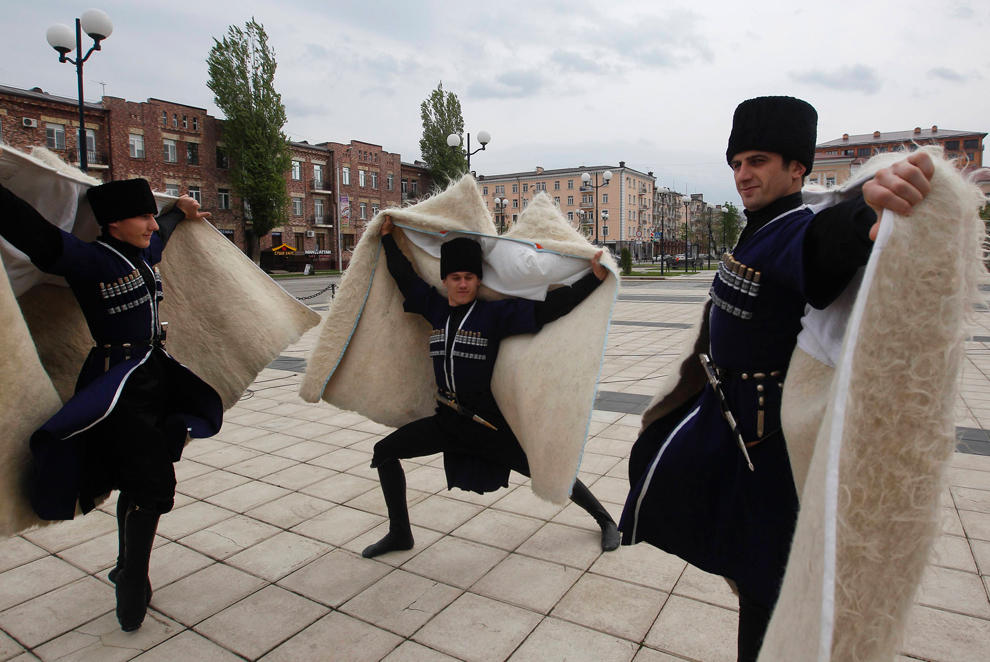
Members of a Chechen dance group pose for photographers at a government-organized event marking Chechen language day in the center of the Chechen capital Grozny on April 25. (Maxim Shemetov/Reuters)

2
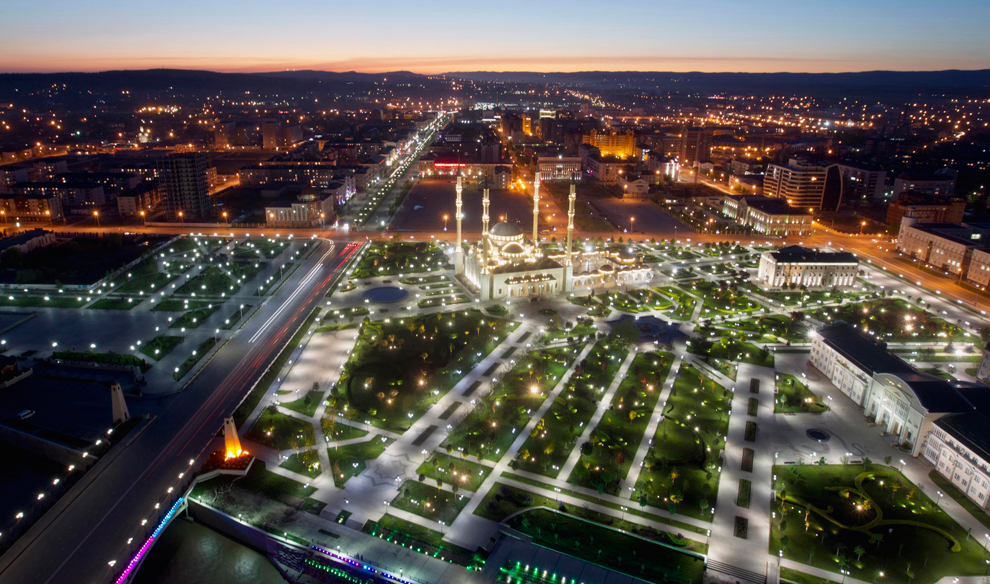
An aerial view shows the center of the Chechen capital of Grozny on April 29. (Maxim Shemetov/Reuters) #

3
Chechen leader Ramzan Kadyrov, center, watches as men load up a cannon during a government-organized event marking Chechen language day in the center of the Chechen capital on April 25. (Maxim Shemetov/Reuters) #

4
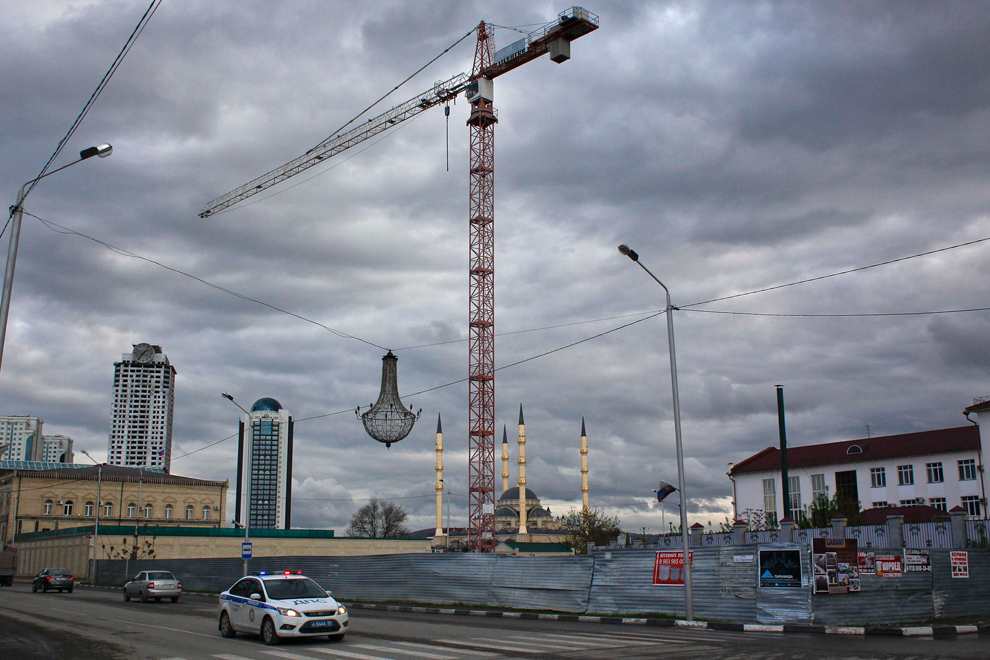
A police car drives along a street in the center of Grozny on April 22. (Maxim Shemetov/Reuters) #

5
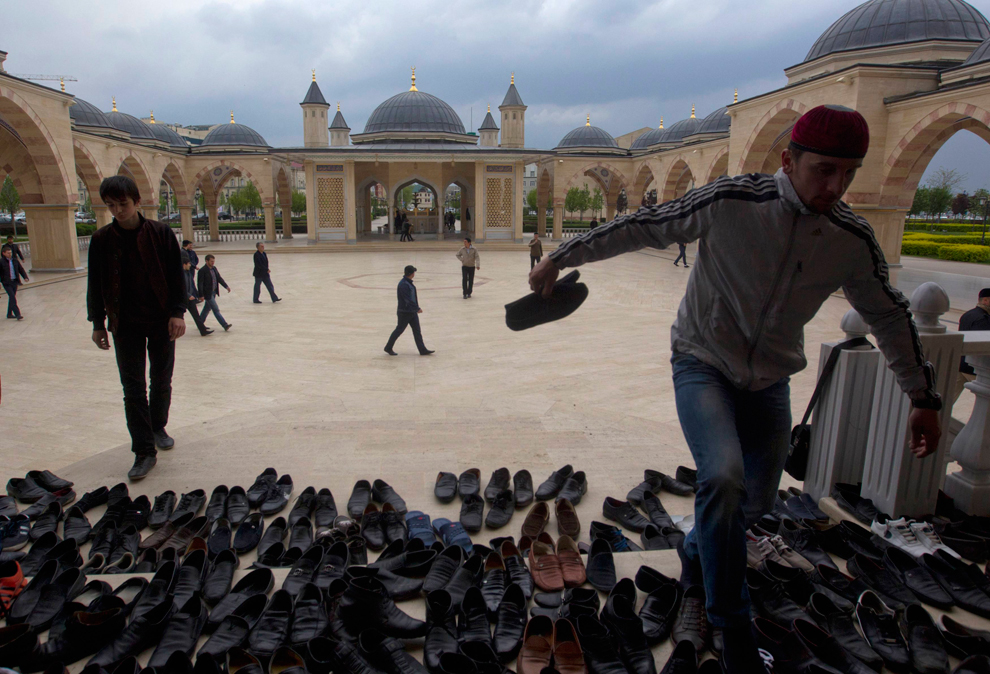
Muslim men arrive for Friday prayers at the central mosque in the Chechen capital of Grozny on April 26. (Maxim Shemetov/Reuters) #

6
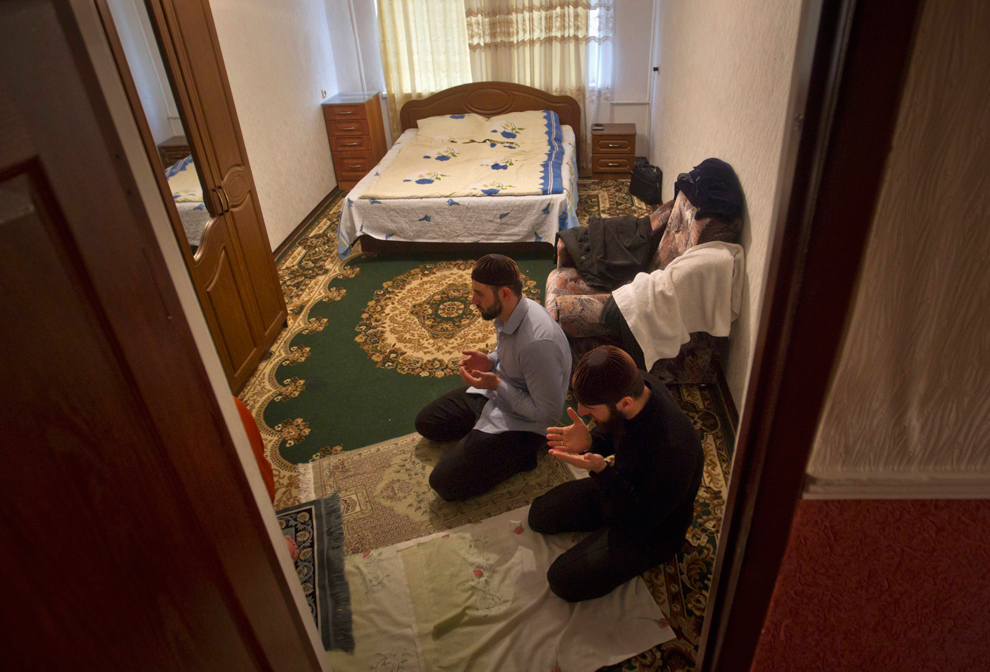
Anzor and Salakhutdin, students at the Russian Islamic University, pray in their flat in Grozny on April 23. (Maxim Shemetov/Reuters) #

7
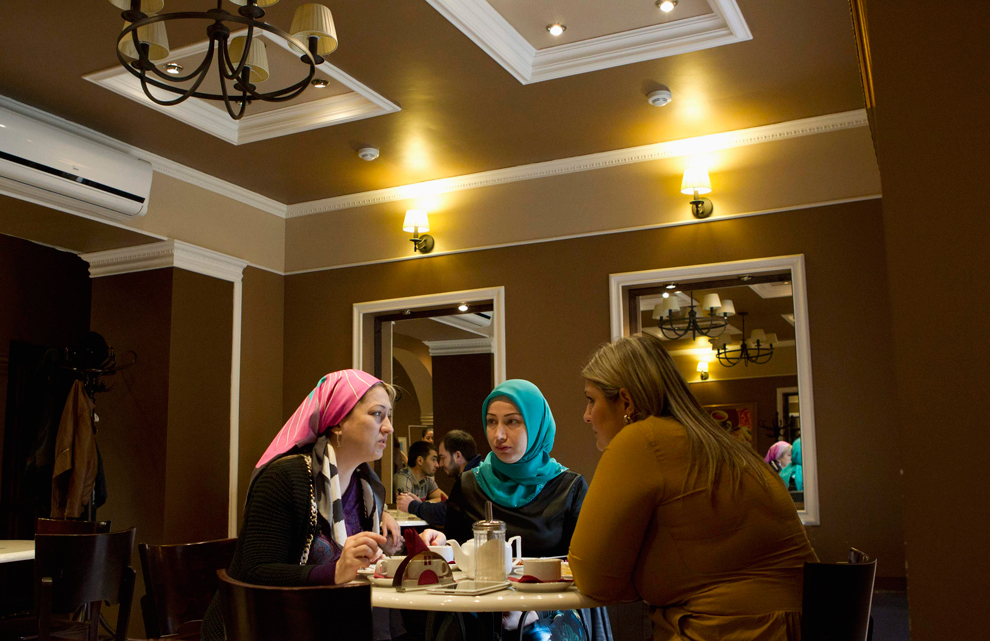
Chechen women chat in a cafe in the center of Grozny on April 23. (Maxim Shemetov/Reuters) #

8
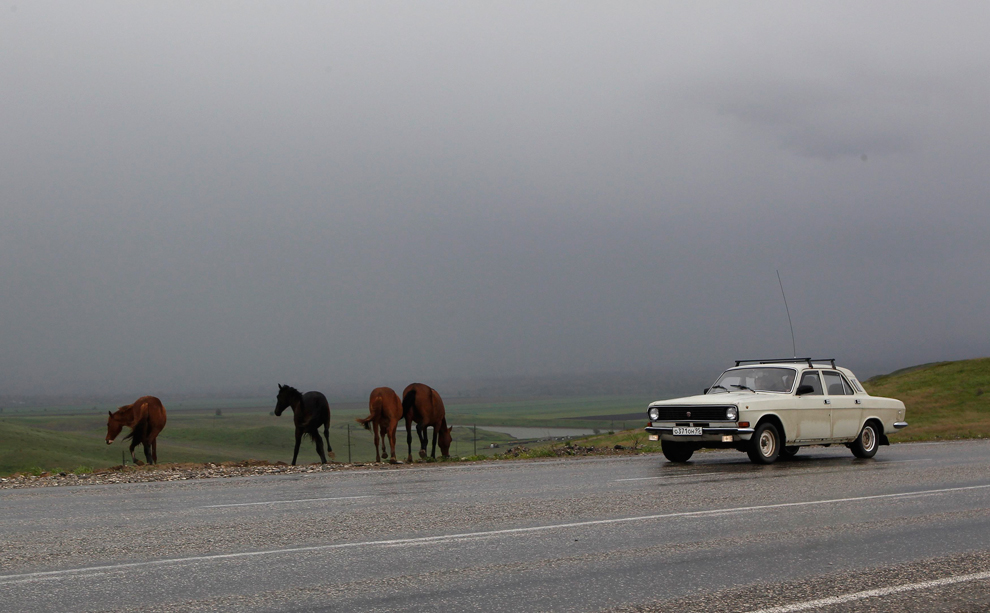
A car drives past horses, standing at the edge of a road, outside the Chechen capital of Grozny on April 24. (Maxim Shemetov/Reuters) #

9
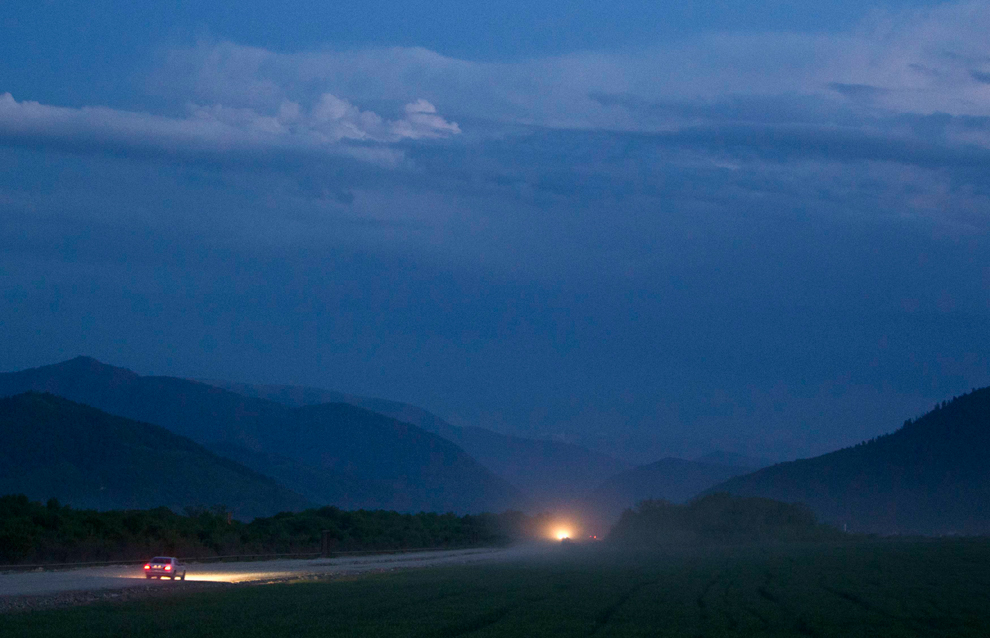
Cars drive along the road outside Chiri-Yurt, the village where the Tsarnaev family has it's roots, in Chechnya, Russia on April 29. (Maxim Shemetov/Reuters) #

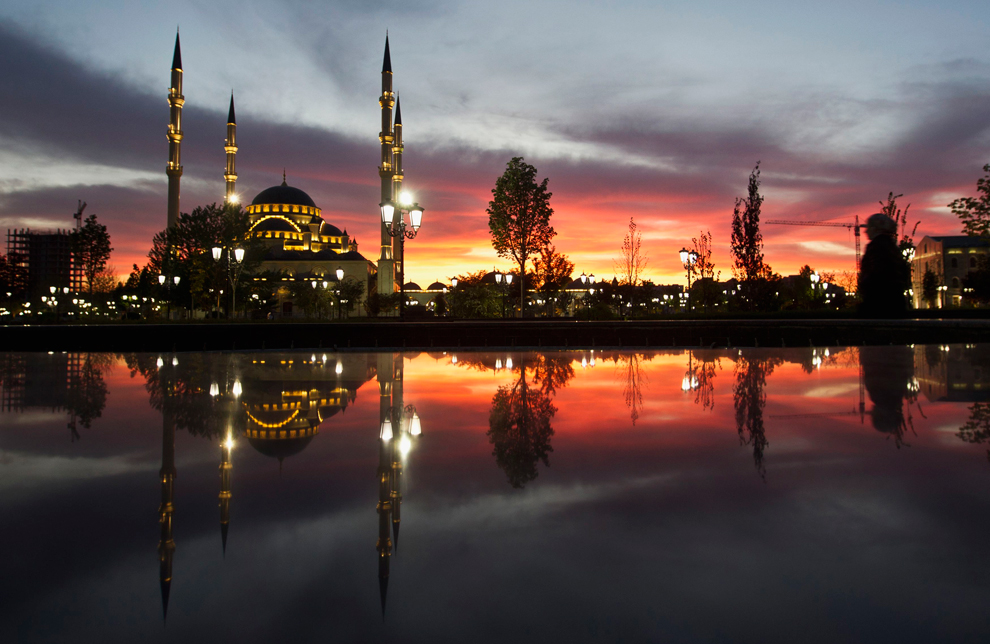
The Heart of Chechnya mosque is seen in the Chechen capital on April 27. (Maxim Shemetov/Reuters) #

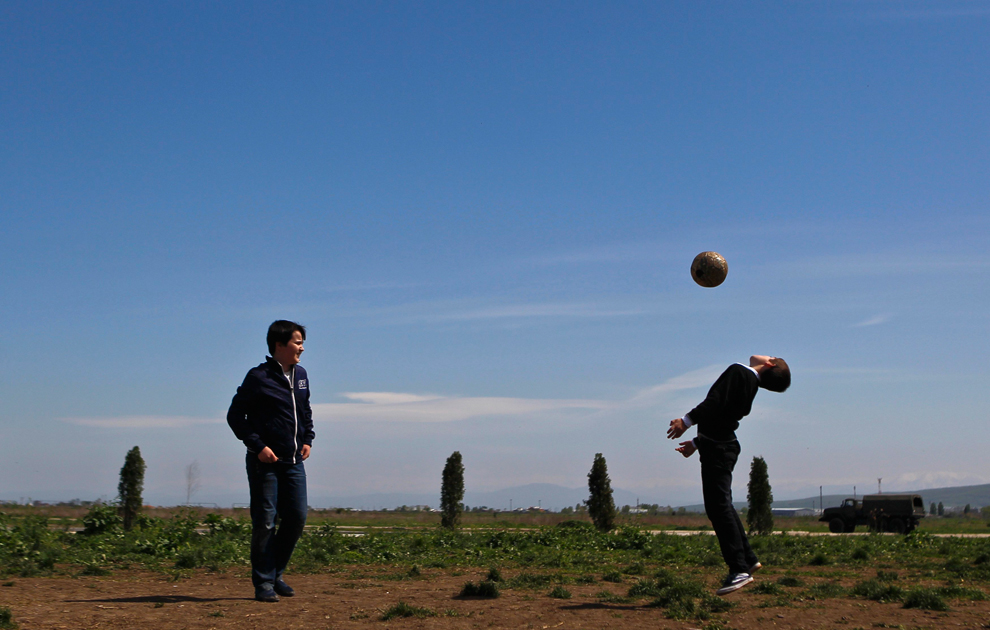
Boys play soccer on the outskirts of Grozny on April 27. (Maxim Shemetov/Reuters) #

Muslim men wait for Friday prayers in the Heart of Chechnya Mosque in Grozny on April 26. (Maxim Shemetov/Reuters) #

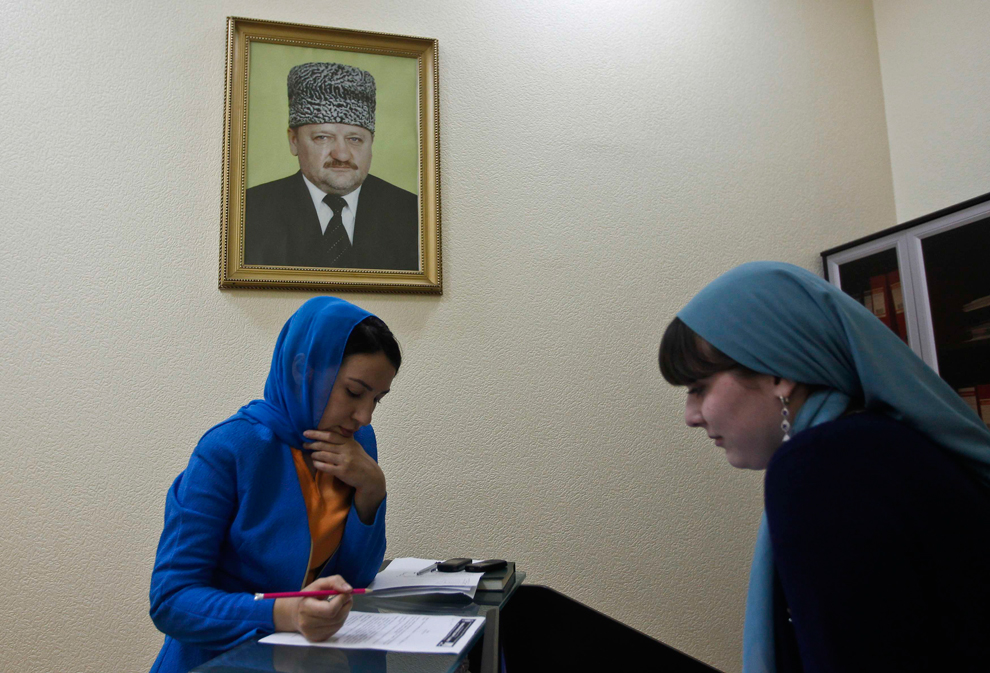
An employee of a memorial complex devoted to former Chechen leader Akhmad Kadyrov signs documents in the Chechen capital on April 26. (Maxim Shemetov/Reuters) #

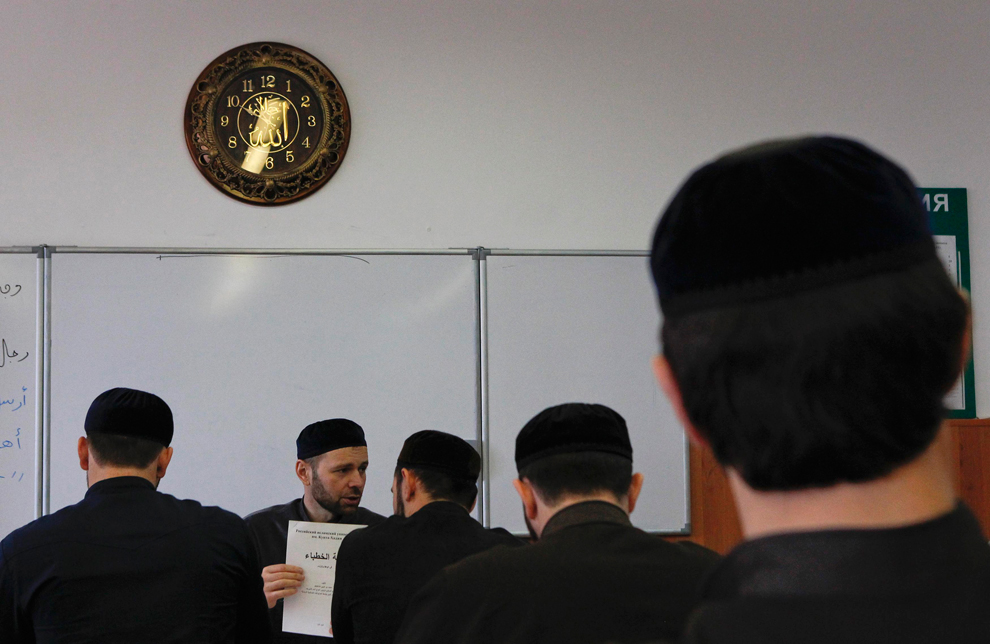
Students attend a lesson at the Russian Islamic University in the Chechen capital of Grozny on April 23. (Maxim Shemetov/Reuters) #

Students attend a lesson in Sharia law at the Russian Islamic University on April 23. (Maxim Shemetov/Reuters) #

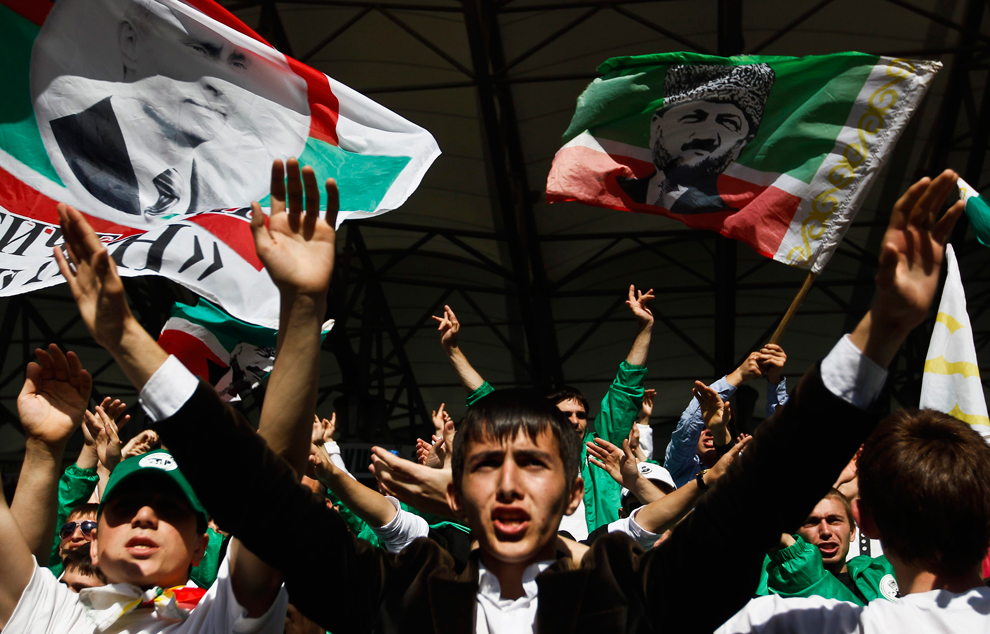
Terek Grozny fans support their team during a soccer match against Amkar Perm at the Akhmad Arena stadium in Grozny on April 27. (Maxim Shemetov/Reuters) #

Participants in a local mixfight competition wrestle in the ring, with a portrait of former Chechen leader Akhmad Kadyrov in the background in the village of Goryachevodsk on April 24. (Maxim Shemetov/Reuters) #

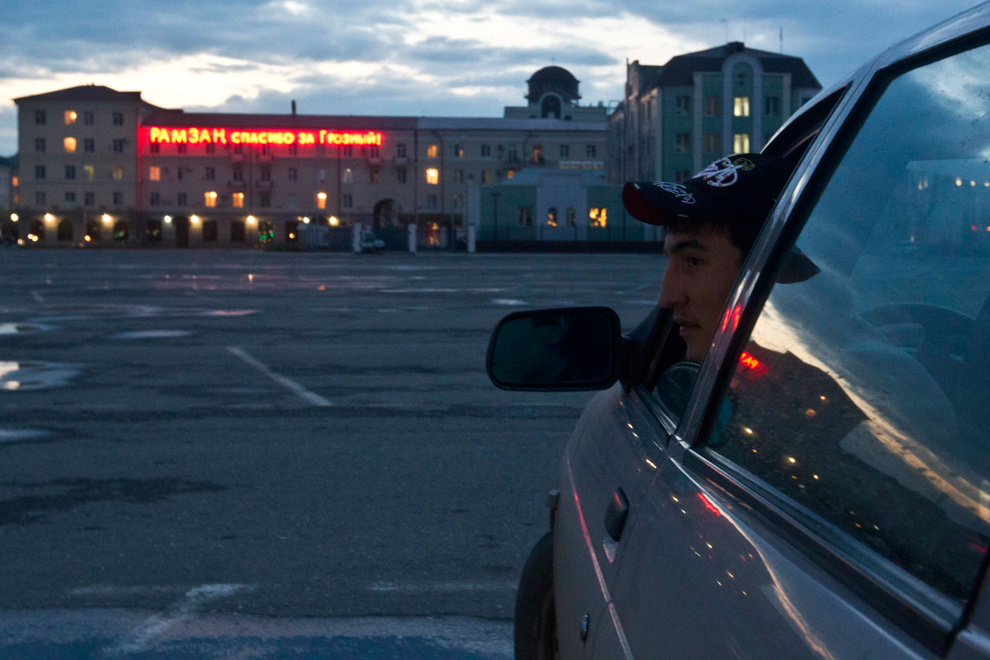
A young Chechen man looks out of a car in front of a building that bears the slogan: "Ramzan, thank you for Grozny!" in the Chechen capital on April 22. (Maxim Shemetov/Reuters) #

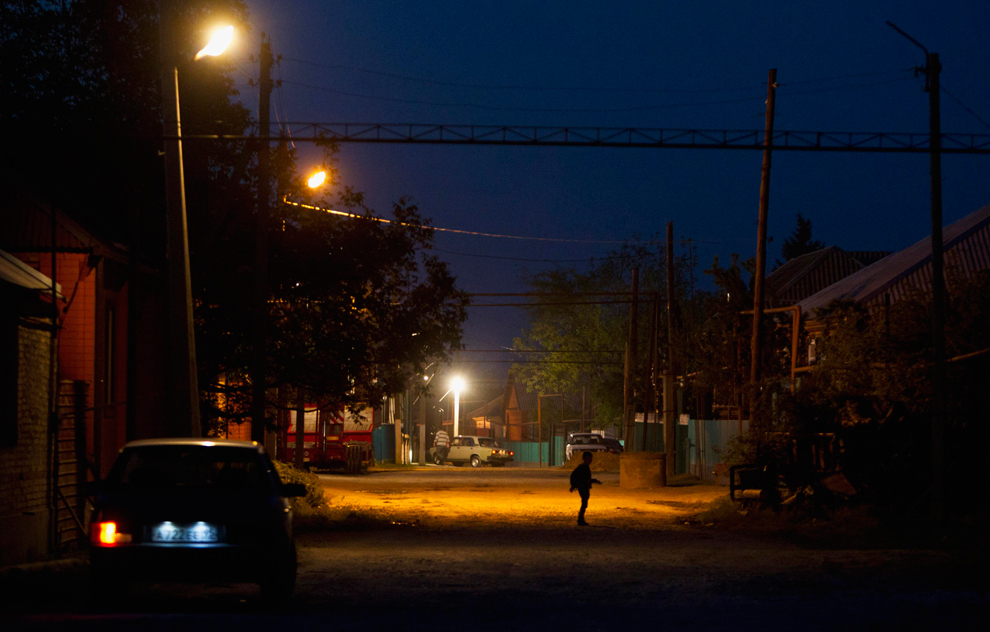
A boy walks along the street in Chiri-Yurt, the village where the Tsarnaev family has its roots, in Chechnya, Russia on April 29. (Maxim Shemetov/Reuters) #

People wait for a bus outside Chiri-Yurt, the village where the Tsarnaev family has its roots, in Chechnya, Russia. (Maxim Shemetov/Reuters) #

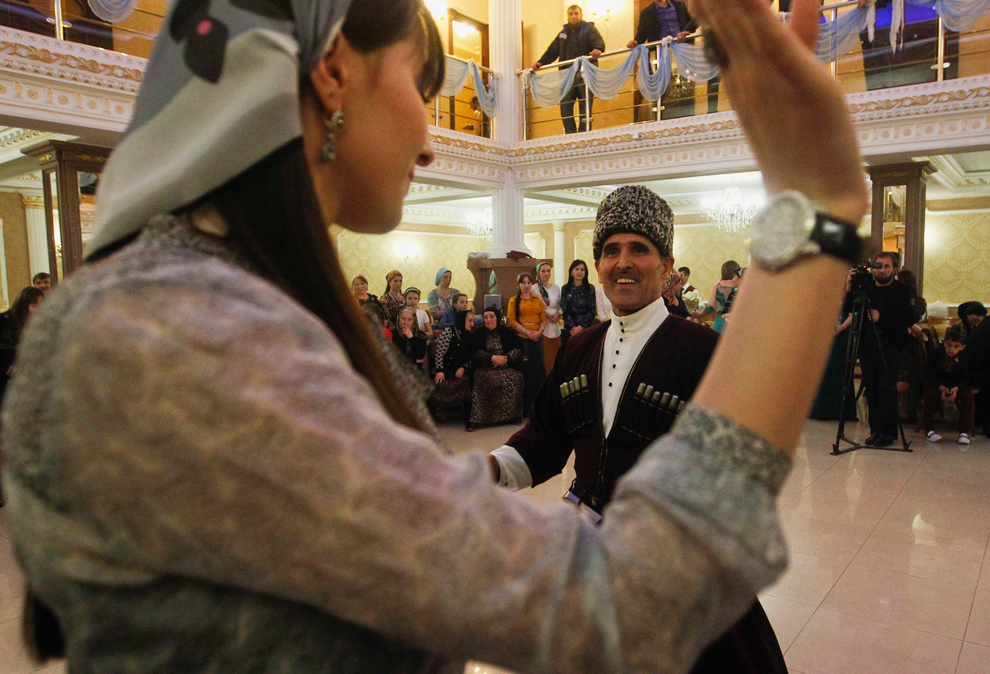
Guests dance at a wedding in the Chechen capital on April 24. (Maxim Shemetov/Reuters) #

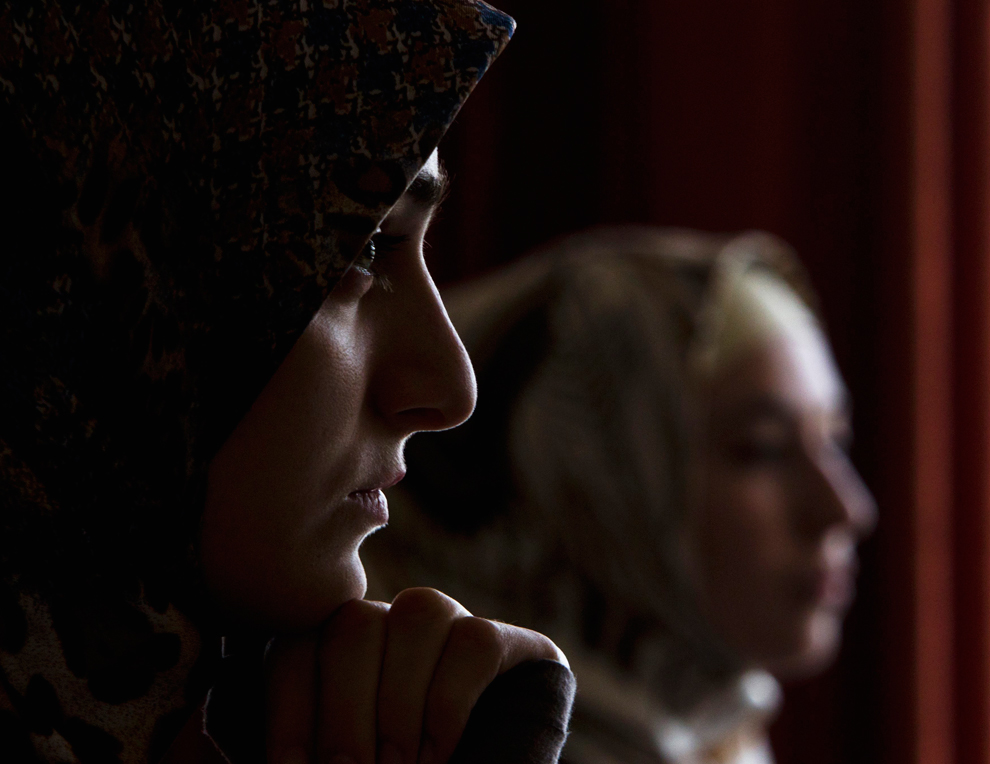
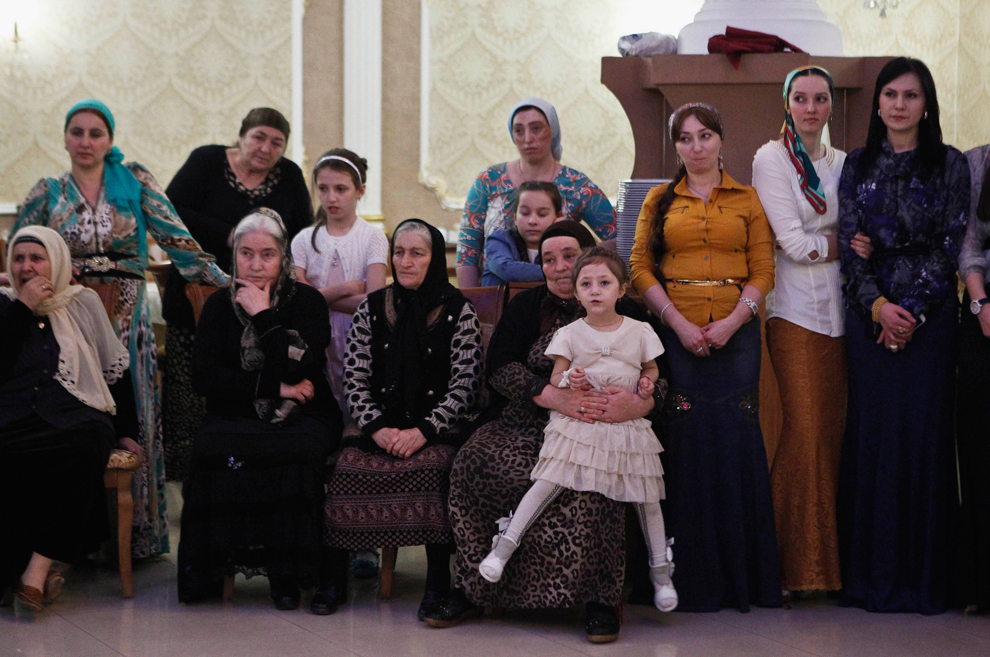
Women watch dancing at a wedding party in Grozny on April 24(Maxim Shemetov/Reuters) #

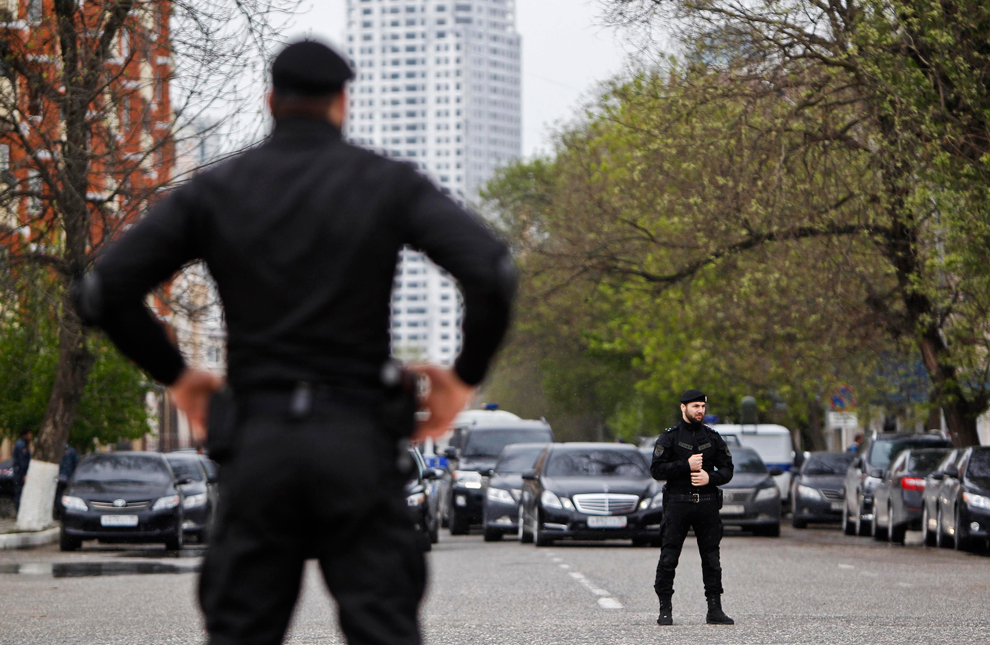
Special forces officers stand guard during a government-organized event marking Chechen language day in the center of the Chechen capital of Grozny on April 25. (Maxim Shemetov/Reuters) #

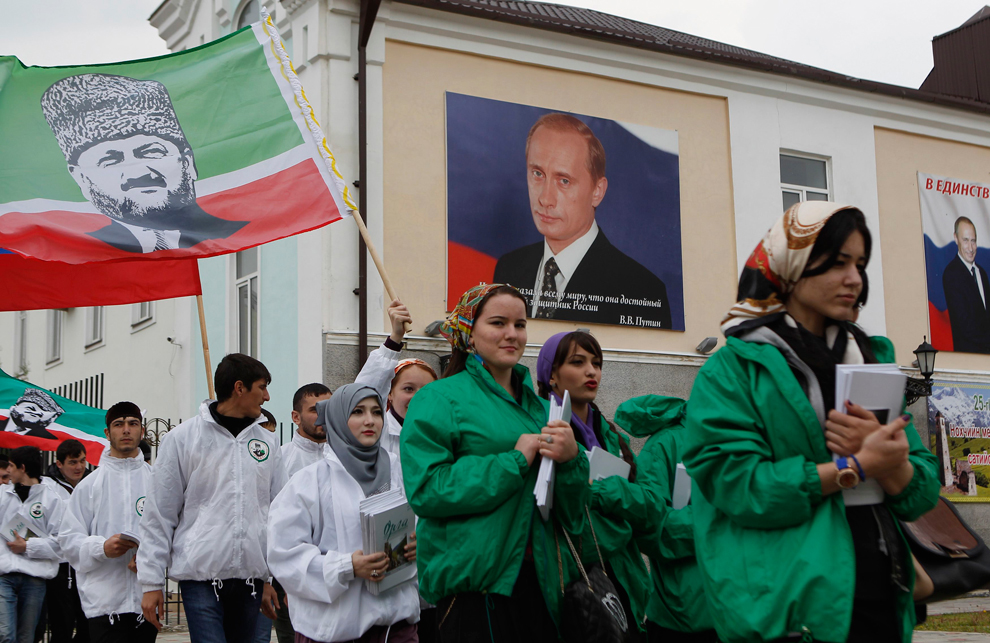
Members of a youth club supporting former Chechen leader Akhmad Kadyrov (printed on flag) march along a street during a rally in the center of the Chechen capital of Grozny on April 25. (Maxim Shemetov/Reuters) #

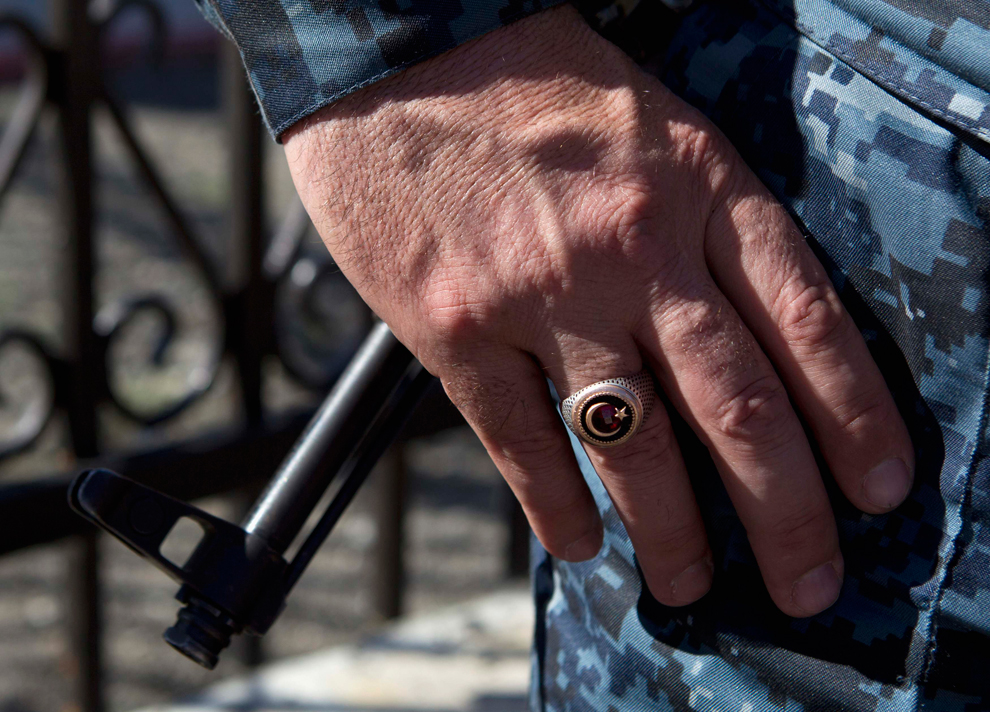
A policeman wears a ring showing the Islamic symbol of the star and crescent, in the Chechen village of Itum-Kale April on 29. (Maxim Shemetov/Reuters) #

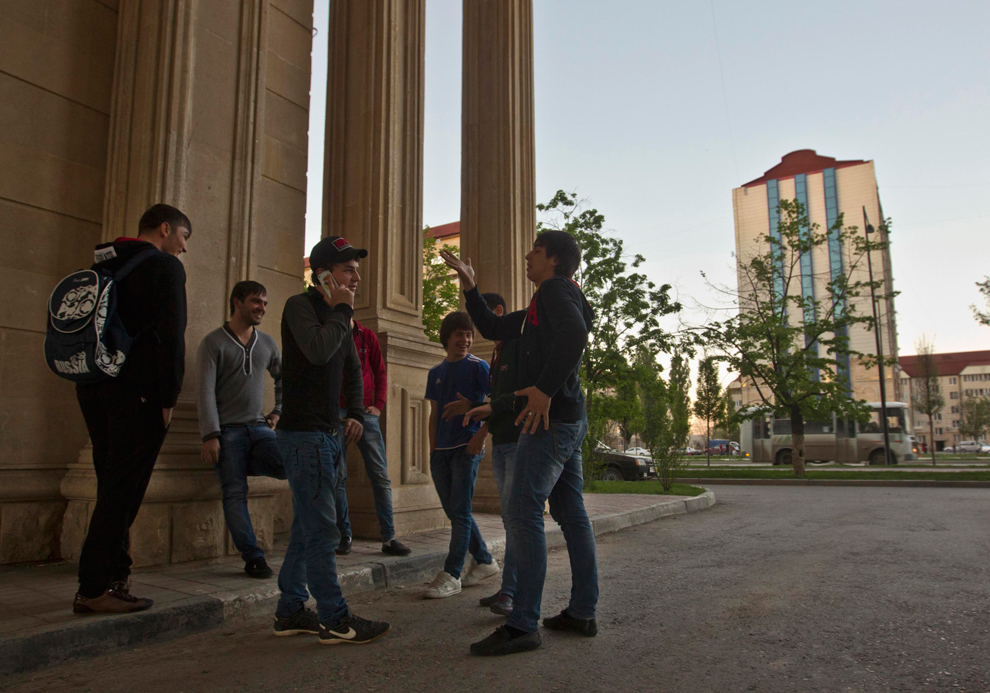
A group of young Chechen men hang out on a street corner in the center of the Chechen capital of Grozny on April 29. (Maxim Shemetov/Reuters) #

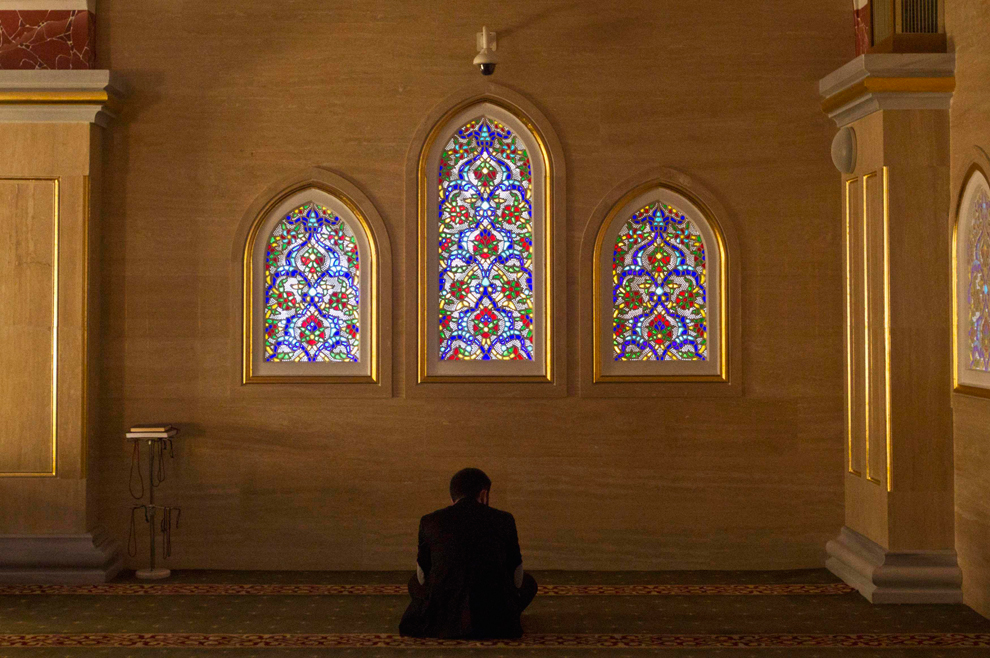
A Muslim man prays in the Heart of Chechnya Mosque in Grozny on April 26. (Maxim Shemetov/Reuters) #

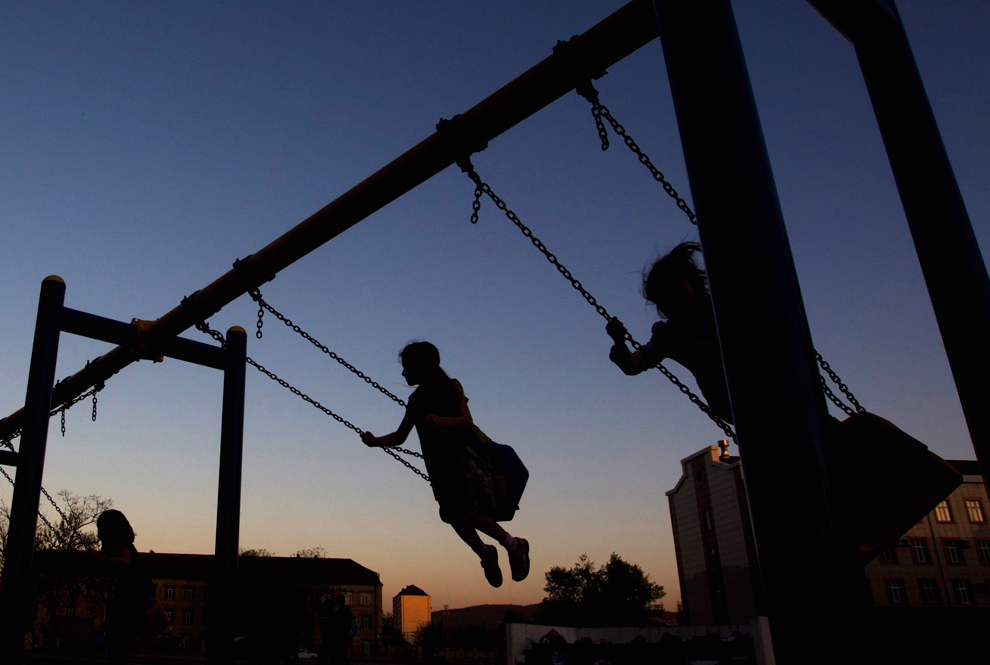
Girls play on swings in a playground in the Chechen capital of Grozny on April 29. (Maxim Shemetov/Reuters) #

--