Showing posts with label no sex please II. Show all posts

Saturday, 1 November 2014

Paralysed man walks again after cell transplant


http://www.youtube.com/watch?v=jgpRjwa2EiA
Darek Fidyka, who was paralysed from the chest down in a knife attack in 2010, can now walk using a frame.
The treatment, a world first, was carried out by surgeons in Poland in collaboration with scientists in London.

“Start Quote

I have waited 40 years for something like this”
Prof Wagih El Masri Consultant spinal injuries surgeon
Details of the research are published in the journal Cell Transplantation.
BBC One's Panorama programme had unique access to the project and spent a year charting the patient's rehabilitation.
Darek Fidyka, 40, from Poland, was paralysed after being stabbed repeatedly in the back in the 2010 attack.
He said walking again - with the support of a frame - was "an incredible feeling", adding: "When you can't feel almost half your body, you are helpless, but when it starts coming back it's like you were born again."
Prof Geoff Raisman, chair of neural regeneration at University College London's Institute of Neurology, led the UK research team.
He said what had been achieved was "more impressive than man walking on the moon".
UK research team leader Prof Geoff Raisman: Paralysis treatment "has vast potential"
The treatment used olfactory ensheathing cells (OECs) - specialist cells that form part of the sense of smell.
OECs act as pathway cells that enable nerve fibres in the olfactory system to be continually renewed.
In the first of two operations, surgeons removed one of the patient's olfactory bulbs and grew the cells in culture.
Two weeks later they transplanted the OECs into the spinal cord, which had been cut through in the knife attack apart from a thin strip of scar tissue on the right. They had just a drop of material to work with - about 500,000 cells.
About 100 micro-injections of OECs were made above and below the injury.
Four thin strips of nerve tissue were taken from the patient's ankle and placed across an 8mm (0.3in) gap on the left side of the cord.
The scientists believe the OECs provided a pathway to enable fibres above and below the injury to reconnect, using the nerve grafts to bridge the gap in the cord.
line
How the injury was treated
Spinal graphic
1) One of the patient's two olfactory bulbs was removed and the olfactory ensheathing cells (OECs) were grown in culture
2) 100 micro injections of OECs were made above and below the damaged area of the spinal cord
3) Four strips of nerve tissue were placed across an 8mm gap in the spinal cord. The scientists believe the OECs acted as a pathway to stimulate the spinal cord cells to regenerate, using the nerve grafts as a bridge to cross the severed cord
line
Before the treatment, Mr Fidyka had been paralysed for nearly two years and had shown no sign of recovery despite many months of intensive physiotherapy.
This programme of exercise - five hours per day, five days a week - has continued after the transplant at the Akson Neuro-Rehabilitation Center in Wroclaw.
Mr Fidyka first noticed that the treatment had been successful after about three months, when his left thigh began putting on muscle.
Six months after surgery, Mr Fidyka was able to take his first tentative steps along parallel bars, using leg braces and the support of a physiotherapist.
Two years after the treatment, he can now walk outside the rehabilitation centre using a frame.
He has also recovered some bladder and bowel sensation and sexual function.
Dr Pawel Tabakow, consultant neurosurgeon at Wroclaw University Hospital, who led the Polish research team, said: "It's amazing to see how regeneration of the spinal cord, something that was thought impossible for many years, is becoming a reality."
Darek undergoing physiotherapy Mr Fidyka undergoes five hours of physiotherapy a day
Mr Fidyka still tires quickly when walking, but said: "I think it's realistic that one day I will become independent.
"What I have learned is that you must never give up but keep fighting, because some door will open in life."
The groundbreaking research was supported by the Nicholls Spinal Injury Foundation (NSIF) and the UK Stem Cell Foundation (UKSCF)
UKSCF was set up in 2007 to speed up progress of promising stem cell research - the charity has to date contributed £2.5m
NSIF was set up by chef David Nicholls after his son Daniel was paralysed from the arms down in a swimming accident in 2003.
To date the charity has given £1m to fund the research in London and a further £240,000 for the work in Poland.
The breakthrough A key difference with Mr Fidyka was that the scientists were able use the patient's olfactory bulb, which is the richest source of olfactory ensheathing cells.
This meant there was no danger of rejection, so no need for immunosuppressive drugs used in conventional transplants.
Most of the repair of Mr Fidyka's spinal cord was done on the left side, where there was an 8mm gap.
He has since regained muscle mass and movement mostly on that side.
Scientists believe this is evidence that the recovery is due to regeneration, as signals from the brain controlling muscles in the left leg travel down the left side of the spinal cord.
MRI scans suggest that the gap in the cord has closed up following the treatment.
None of those involved in the research want to profit from it.
Prof Geoff Raisman said: "It would be my proudest boast if I could say that no patient had had to pay one penny for any of the information we have found."
NSIF said if there were any patents arising, it would acquire them so as to make the technique freely available.
line
The sense of smell and spinal repair
Generic image of a person smelling
The complex neural circuitry responsible for our sense of smell is the only part of the nervous system that regenerates throughout adult life.
It is this ability that scientists have tried to exploit in stimulating repair in the spinal cord.
Every time we breathe, molecules carrying different odours in the air come into contact with nerve cells in the nose.
These transmit messages to our olfactory bulbs - at the very top of the nasal cavity, sitting at the base of the brain.
The nerve cells are being continually damaged and must be replaced.
This process of regeneration is made possible by olfactory ensheathing cells (OECs), which provide a pathway for the fibres to grow back.
line
Mr Nicholls said: "When Dan had his accident I made him a promise that, one day, he would walk again. I set up the charity to raise funds purely for research into repairing the spinal cord. The results with Darek show we are making significant progress towards that goal."
Prof Wagih El Masri said: "Although the clinical neurological recovery is to date modest, this intervention has resulted in findings of compelling scientific significance."
The consultant spinal injuries surgeon, who has treated thousands of patients in the UK, added: "I have waited 40 years for something like this."
All those involved in the research are keen not to raise false hopes in patients and stress that the success will need to be repeated to show definitively whether it can stimulate spinal cord regeneration.
The scientists hope to treat another 10 patients, in Poland and Britain over the coming years, although that will depend on the research receiving funding.
Dr Tabakow said: "Our team in Poland would be prepared to consider patients from anywhere in the world who are suitable for this therapy. They are likely to have had a knife wound injury where the spinal cord has been cleanly severed.
Sir Richard Sykes, chair of the UK Stem Cell Foundation, said: "The first patient is an inspirational and important step, which brings years of laboratory research towards the clinical testbed."
"To fully develop future treatments that benefit the 3 million paralysed globally will need continued investment for wide scale clinical trials,"
line
The researchers
BBC undated handout video grab of Professor Geoffrey Raisman 
  Prof Raisman
Prof Raisman has spent more than 40 years studying how to repair the spinal cord.
In animal studies he showed that OECs injected into the rat spinal cord could reverse paralysis.
In 2005, Prof Raisman was approached by a Polish neurosurgeon who had begun researching how to apply the technique in humans.
BBC undated handout video grab of Dr Pawel Tabakow Dr Tabakow
Dr Tabakow carried out an initial trial involving three paralysed patients who each had a small amount of OECs injected in their damaged spinal cords.
While none showed any significant improvement, the main purpose of the study was achieved, showing that the treatment was safe.http://www.bbc.com/news/health-29645760
line
Panorama's To Walk Again is on Tuesday 21 October at 22:35 BST on BBC One.

Saturday, 24 May 2014

She is why I started to watch football!

She is why I started to watch football!

https://s2.yimg.com/bt/api/res/1.2/I_Zs1.k3eVSX8T5PUFIRqw--/YXBwaWQ9eW5ld3M7cT04NTt3PTYzMA--/http://media.zenfs.com/en-GB/blogs/early-doors/fernanda120471204.jpg

Fernanda Colombo UlianaEarly Doors has always been suspicious of football referees. Deciding to become one of the men in black has always seemed a peculiarly cruel bargain with the devil: sure, you get to be involved in football at a level that could be far higher than your own skill, and we can kind of understand getting a kick out of blowing the whistle and laying down the law.
But are those minor thrills really worth becoming the sporting equivalent of a traffic warden? Is the uniform and the whistle or flag adequate compensation for the constant barrage of abuse from fans and players, aggression that often borders on physical assault, and guaranteed public humiliation every time you make a mistake? It's not as if there's money in it: unless you get to the very highest level, the money on offer equates to little more than petrol expenses.
For a man in early middle age it all might be worth it, of course. But if you were a young, beautiful woman with the world at your feet, would you still give up your weekends to be a match official?
You would if you were 25-year-old Fernanda Colombo Uliana, an up-and-coming match official from Brazil who caused a minor earthquake on the internet when she ran the line at the Brazilian Cup match between Sao Paolo and CRB this week.
Fernanda has just been granted FIFA official status by the refereeing committee of the Brazilian FA (aka the CBF), hence her appearance in such a high profile match.
And rather than regretting the fact that she will now have to have abuse hurled at her from far larger crowds, she is delighted that her career has moved on to the next level - both for herself, and for women in general.
"It's one more step towards winning people over," she told local paper Diario Catarinense.
Fernanda still has a day job, working as a personal trainer specialising in hydro-fitness at a gym in Florianopolis, but it's clear she has eyes on a full-time career in football.
"It's the result of all the dedication I've shown. Who wouldn't want to receive recognition in their chosen career, after all? For me it's a huge victory."

http://www.clicrbs.com.br/rbs/image/16422013.jpg?w=800

http://diariocatarinense.rbsdirect.com.br/imagesrc/16453562.jpg?w=620

http://www.clicrbs.com.br/rbs/image/16421986.jpg?w=800

http://www.clicrbs.com.br/rbs/image/16422011.jpg?w=800

http://www.clicrbs.com.br/rbs/image/16422018.jpg?w=800

http://www.clicrbs.com.br/rbs/image/16421981.jpg?w=800

http://www.clicrbs.com.br/rbs/image/16422033.jpg?w=800

http://www.clicrbs.com.br/rbs/image/16422157.jpg?w=800

http://www.clicrbs.com.br/rbs/image/16453559.jpg?w=800

http://www.clicrbs.com.br/rbs/image/16453555.jpg?w=800

When she is not refereeing, she is a model.

http://www.clicrbs.com.br/rbs/image/16453543.jpg?w=800

https://blogger.googleusercontent.com/img/b/R29vZ2xl/AVvXsEiYOinZwcKaLlTkw_iUX-O-O_G28PWTMIEEbcTC-XOfXSJWTUt0Hoo7hjBSj2TA0hbCmWEB2fDXU-o8cQdzj469fMM2kVokCFlCYI-Zfkqf-ZFNJ4v8H8S2uv4XP7vWCtT-AnJVriDW7jPz/s1600/BANDEIRINHA++IMG_3797.jpg

http://vistolivre.xpg.uol.com.br/wp-content/uploads/IMG_3796.jpg

https://blogger.googleusercontent.com/img/b/R29vZ2xl/AVvXsEhd3cyqy0VhJjtp8vefquADumX4-BAY4KCgdGszwTm-tofWrHjzquqOQD1Y6UmVToi1JceKObD5Fi9kiX3hXA71RehyUr6flrNuWRtlFrF5TgQzSEFT1OY2CXkQ6uGd_AoSkkD_0pZKQjzA/s1600/BANDEIRINHA+IMG_3756.jpg

https://blogger.googleusercontent.com/img/b/R29vZ2xl/AVvXsEjnzgHxYYKS-Xxs2L6Nih52WiIX57Ci65ZRGPNiZ1nSXF1k5lIbozodhIF3esvis6Hwg61BcsJBH_T7IHCEsSSQn7ZL2XzhFO6XoXhzstKufPCwl2MxSl61dzQh35yXU8Wt-P4HEI9fIN7l/s1600/BANDEIRINHA+IMG_3771.jpg

http://vistolivre.xpg.uol.com.br/wp-content/uploads/IMG_3790.jpg

http://vistolivre.xpg.uol.com.br/wp-content/uploads/IMG_3832.jpg


http://vistolivre.xpg.uol.com.br/wp-content/uploads/IMG_3930.jpg

Sunday, 18 May 2014

The dog ripped into the boy's leg, but was promptly chased away by a cat


The dog ripped into the boy's leg, but was promptly chased away by a cat
A brave feline has proven that cats can be just as loyal as man's best friend, by saving its young owner from a dog attack on a California street on Tuesday.
In the footage entitled My cat saved my son, which appears to have been shot by a CCTV camera, a young boy is seen riding his bike on a driveway next to a parked car.
A shot taken from a different angle then shows a sandy-coloured dog trot into view on the opposite side of the stationary vehicle, and run up to the child.

Suddenly, the animal viciously bites into the boy’s leg and drags him from his bike onto the tarmac.

Within seconds, the boy’s cat hurtles towards the dog and chases it away, while the boy’s mother tends to her son.

Having dealt with the dog, the cat returns to the boy, and the family flees the scene.

At the end of the footage, the boy's father assures viewers that his son is now safe and well - and shares a grisly photo of the boy's wound which required stitches.

The wound inflicted by the dog who attacked the small boy (YouTube)
Bakersfield police said the attacking dog, identified as an 8-month-old Labrador-Chow mix, had been surrendered by its owner's family after the Tuesday afternoon attack and was in quarantine and would ultimately be euthanized.
Police spokesman Sergeant Joseph Grubbs said the dog's owners, who live in the same neighborhood as the boy, said the dog did not like children or bicycles. He did not identify the owner by name.

http://www.independent.co.uk/news/weird-news/video-shows-cat-save-boy-from-dog-attack-9373043.html

Cat Saves Little Boy From Being Attacked by Neighbor's Dog

http://www.youtube.com/watch?v=LSG_wBiTEE8

Beverly Hills demands Brunei Sultan sell hotel after hudud move

Beverly Hills demands Brunei Sultan sell hotel after hudud move 

LOS ANGELES: Beverly Hills is demanding that the Sultan of Brunei sell a hotel in the celebrity-rich US city, after he introduced a penal code incorporating Islamic sharia law, officials said Wednesday. 
Stars including Jay Leno, Ellen DeGeneres and business tycoon Richard Branson have also called for a boycott of the chain, which owns the Beverly Hills Hotel. But the head of the Dorchester Collection chain said that would be wrong-headed, and only harm hotel staff. 
"The actions you take have to be seriously considered because they will effect the livelihoods of these people," Christopher Cowdray told Beverly Hills city lawmakers at a council meeting Tuesday night. 
Brunei's all-powerful Sultan Hassanal Bolkiah announced last week that he would push ahead with implementing sharia, despite criticism both at home and internationally. 
An initial phase officially came into effect Thursday, with a second phase including more stringent penalties, including the severing of limbs for theft and robbery, to begin later in the year. 
Late next year, punishments such as death by stoning for offenses including sodomy and adultery will be introduced. 
The Beverly Hills City Council passed a resolution Tuesday "condemning the government of Brunei for a series of laws that impose extremely harsh penalties, including death by stoning for homosexuality and adultery." 
"This resolution is calling for the (Brunei) government to change their laws or to divest themselves of the Beverly Hills Hotel to separate the fact that our iconic hotel is under their ownership," added Mayor Lili Bosse. 
Sultan Hassanal owns the historic Beverly Hills Hotel as well as the Bel-Air Hotel in Los Angeles through his company Dorchester Collection, which also has branches in London, Paris, Milan and Rome. 
The city council said they would send the resolution to the State Department asking Washington to "take appropriate action to condemn the Brunei government's policies." 
The United States has "relayed our concerns privately to the government of Brunei," State Department spokesman Jen Psaki said Tuesday, but it will not follow a growing boycott of the Sultan's luxury hotel chain. 
Beverly Hills' mayor called the new laws "shocking, inhumane." 
"They must be met with a strong statement of support for human rights of the people of Brunei," she said.
The Dorchester Collection is reportedly owned by the Brunei Investment Agency, a sovereign wealth fund under the oil-rich sultanate's Ministry of Finance. 
The upmarket chain also includes the Bel Air Hotel, which is a few miles from the Beverly Hills Hotel although administratively in Los Angeles, rather than Beverly Hills. 
It also includes the Dorchester Hotel in London, Le Meurice and Hotel Plaza Athenee in Paris, Le Richemond in Geneva and the Hotel Eden in Rome. 
The sultan's support for sharia law has sparked rare domestic criticism of the fabulously wealthy ruler on the Muslim-majority country's active social media, and international condemnation including from the UN's human rights office. 
On Monday, former US talk show host Leno joined a growing list of celebrities vowing to boycott the luxury hotel chain. 
Virgin group founder Richard Branson tweeted at the weekend that Virgin employees would not stay at the hotel chain "until the Sultan abides by basic human rights," the British billionaire wrote. 
Others who have called for a boycott include talk show host DeGeneres, British comedian Stephen Fry and TV star Sharon Osbourne. - AFP

Tuesday, 17 December 2013

Lavender Face & Body Cream


Lavender Face & Body Cream
(adapted from Earthly Bodies, Heavenly Hair by Dina Falconi)

3/4 cup/6 oz. extra virgin olive oil or almond oil
1/4 cup/2 oz. coconut oil
2 tablespoons/1 oz. unrefined shea butter
3/4 oz. beeswax
1 cup + 2 tablespoons/9 oz. purified or distilled water
30 to 60 drops lavender essential oil
equipment:
1 quart glass pyrex measuring cup
electronic scale
shallow saucepan
instant-read thermometer
immersion blender

(Important note: Measurements for water, liquid and solid oils and butters are by volume; measurement for beeswax is by weight. In other words, use volume containers such as measuring cups and spoons for measuring the water, liquid and solid oils and butters, and use an electronic scale to measure the beeswax. You can also increase the amount of beeswax to 1 ounce; the cream will be slightly thicker.

Also, this recipe, when made with olive oil as the base, produces a very rich cream, great for very dry skin. When made with almond oil as the base, the final cream is a little lighter and more suitable for dry to normal skin. If you're unsure, try making a half-batch of this recipe so you can test what you like before making the full version).


Put olive oil or almond oil, coconut oil, shea butter and beeswax in the glass pyrex measuring cup. Fill the saucepan half-way with water. Place pyrex container in the water bath in the saucepan, turn heat to low, and stir until the coconut oil, shea butter, and beeswax are completely melted. Transfer mixture to a 1 quart mason jar. Let mixture come to body temperature, about 98ºF. While oils are cooling, heat water to body temperature, about 98ºF. Pour water into mason jar containing melted beeswax and oils. Add lavender essential oil. Place immersion blender into the jar until blade or whisk touches the bottom of the jar. Turn blender on; once the mixture begins to emulsify, move blender around the jar to incorporate any streaks of unblended oil or water. Blend until mixture is a creamy emulsion, as you would when making homemade mayonnaise. Transfer to clean jar with tight-fitting lid. Let the cream sit for a few hours before using it. Store the cream away from direct heat and sun. The cream should keep for 3 to 6 months.


makes around 2 cups


Natural Face and Body Care Books

Natural Beauty At Home: More Than 250 Easy-To-Use Recipes for Body, Bath and Hair by Janice Cox
Earthly Bodies & Heavenly Hair: Natural and Healthy Personal Care For Every Body by Dina Falconi

Organic Body Care Recipes: 175 Homemade Herbal Formulas For Glowing Skin & A Vibrant Self by Stephanie Tourles

The Herbal Body Book: A Natural Approach To Healthier Hair, Skin, and Nails by Stephanie Tourles

Naturally Healthy Hair: Herbal Treatments and Daily Care For Fabulous Hair by Mary Beth Janssen


http://themusicianwhocooks.blogspot.com/2012/03/my-kitchen-apothecarium.html

Thursday, 1 August 2013

Royal Princess, Royal Scandal - the sad life of Princess Margaret

Thursday, January 10, 2008

Royal Princess, Royal Scandal - the sad life of Princess Margaret 

It'll be six years next month that HRH Princess Margaret passed away at the age of 71. Apparently her ex-husband, Lord Snowdon has decided to share intimate details of his marriage to the late Princess in a new biography.

According to Hello Magazine: "News of the book, which is set to hit UK stores in the summer, may come as a surprise to many royal watchers.

"There has always been an understanding that no biography would be published during his lifetime," says royal author Tim Heald - who wrote a biography of the Queen's late sister. "He has never spoken a word in public about Margaret," he continues, "He has remained very loyal to her and to her memory."

"However, the royal snapper, who married the beautiful, blue-eyed royal at Westminster Abbey in 1960, has given his "full agreement" to the new biography by well-known journalist Anne de Courcy. "I am now happy for people to know about my life and I want to put the record straight on some things," says the 77-year-old, whose famously turbulent union ended in divorce in 1978. Snowdon: The Biography will be published in June."

Before Princess Diana became the most written about and hunted royal in modern history, and pictures of Fergie getting her toes sucked were splashed around the world, Princess Margaret captured the imagination and the paparazzi's interest from the 1950's right up to her divorce from Lord Snowden in 1978. She was noted as one of the most glamorous, well-dressed women in the world. In the post war gloom of Britain, Princess Margaret could be seen out every night in glamorous night clubs with her society friends, cigarette in hand. A rather far cry from the rather forlorn figure in her last years who had a reputation for being rude and pompous.

Her Royal Highness, Princess Margaret Rose was born at Glamis Castle in Scotland on the night of a tremendous storm on August 21st 1930. In a sense it was an omen of what her life would become. At the time of her birth, her father, the Duke of York, was second in line to throne after his brother the future Duke of Windsor. Margaret was brought up with her older sister Elizabeth in a townhouse on Piccadilly. If things had been different, Margaret would have passed into history as a very minor member of the Royal Family, probably living her life out in the country as a member of the aristocracy, with their dogs, and hunting.

Instead, Margaret found herself thrust on the world stage when her Uncle David abdicated the throne in December of 1936. All of a sudden, her father was King and her sister was the heir apparent. They moved from their cozy little townhouse to the great behemoth that is Buckingham Palace. From childhood, Margaret was indulged. Although Elizabeth was the future Queen of England, Margaret was clearly her father’s favorite. She was naughty, with a wicked sense of humor and the ability to mimic anyone. When she was caught, she managed to diffuse the situation by making everyone laugh until they forgot why she was being punished. Margaret was also more affectionate and effusive than her older sister.

Although they fought like cats and dogs at times, the two sisters were almost like twins, until their father’s coronation when Elizabeth had a train on her gown but Margaret did not. From then on Margaret was aware of her status as the ‘spare.’ When her sister was being given lessons in history twice a week from the Provost at Eton, Margaret wanted lessons too. No one seems to have known what to do with Margaret. In the old days of Princesses, she would have been packed off as soon as possible to some foreign court to become the consort of a reigning Prince. But the First World War had taken care of most of the monarchies of Europe, and the ones that were left were holding on by a string.

Royal sons could go into the Navy or the Army, or be packed of to be Governor General of one of the colonies like Australia or New Zealand. There was no thought to the possibility of Margaret attending University the way Prince Charles and Prince Edward did, or even attending Art College the way her own children were able to. What ever talents she possessed were never developed beyond that of an amateur.

By the time she was 18, Princess Margaret was sexy, beautiful, and self-assured with a drop dead gorgeous figure that was turned out to perfection in the waspwaisted fashions of the post-War era. While Princess Diana had cultivated the image of ‘Shy Di,’ awkward and unsure of her role as the Princess of Wales, Margaret was the personification of the world’s idea of a Princess.

The press in the post war world was remarkably different from the diffidence shown the royal family previously. The culture of the paparazzi was in its infancy, and Princess Margaret was their first and most famous subject. When she wore a two piece bathing suit while on a royal tour of Italy, photographs appeared around the world. Nowadays when tons of photos appeared in the press of Princess Diana cavorting in a bikini while pregnant, nobody batted an eye but back then things were different. No royal had ever been photographed wearing a bathing suit before.

Princess Elizabeth had married Prince Philip in November of 1947, and by the next November she’d had her first child. She was a settled matron, living the life as a naval officer’s wife. Margaret took up her role as the royal with a vengeance. She had no job and not many friends her own age, apart from a few selected children who had been brought into the royal nursery when she and her sister were growing up. With no real role, Margaret threw herself into becoming the life of every party that was going on.

Her name was regularly in the gossip columns as she partied with the so-called Princess Margaret Set - Old Etonian Billy Wallace, Dominic Elliot (son of the Earl of Minto), the Earl of Dalkeith, Mark Bonham Carter, the Marquess of Blandford and many now-forgotten Guardsmen. And she loved to sing at the piano in nightclubs, surrounded by laughing friends.
She still had her duties to fulfill, which she apparently did well. Margaret’s generation took the idea of ‘duty’ seriously, even though what she was often called on to do wasn’t exciting or glamorous. Opening hospitals, petrol stations, christening ships, visiting schools were all a part of the daily round of royal duties that Margaret was expected to fulfill. She had more fun in her role as patron of the Royal Ballet.

Margaret’s world changed abruptly when her father, George VI died in February of 1952 at the age of 56. He’d not been well, worn down by the war years and the burden of being King. Margaret, being the quintessential Daddy’s girl, was devastated. She told a biographer that “there was an awful sense of being in a black hole. I remember being tunnel-visioned and didn’t really notice things.”

While everyone was catering to her sister in her new role as Queen Elizabeth II, Margaret was pushed aside, with no thought by anyone of what she might be going through having lost her father. From living at Buckingham Palace, she was now relegated to Clarence House, the Queen Mother’s new home. She was now marginalized for the new royal family consisting of the Queen, Prince Philip and Charles and Anne. Her role was now to be on the sidelines.


But Margaret wouldn’t stay there. The first and most famous incident in Princess Margaret’s life was her love affair with Group Captain Peter Townsend. Townsend had been her father’s equerry for years; he was a war hero, sixteen years her senior and married, although he was soon to be divorced. In her grief over her father’s death, Margaret turned more and more to Townsend for consolation. He too had suffered a loss when the King died.
The relationship had apparently started long before the King’s death and would probably have stayed under the radar, if Princess Margaret hadn’t been caught out brushing a piece of fluff off Townsend’s lapel during the coronation.

Princess Margaret desperately wanted to marry Townsend, but there were several obstacles, the most pressing being that he was divorced. Despite the fact that he was the injured part, divorce in aristocratic and royal circles was still a big taboo in the fifties. As the Queen was the Defender of the Faith and the Head of the Church of England, having her sister marry a divorced man was unthinkable.

When Prince Michael of Kent married the former Marie Christine Reibnitz in 1978, he still had to renounce his right to the throne because she was not only divorced but Catholic. 40 years after Princess Margaret gave up the man she loved, Princess Anne became the first divorced royal to remarry and that wedding had to take place in Scotland as Mark Philips is still alive.

Margaret was told, erroneously it turns out, that not only would she have to renounce her place in the succession, but that she would be stripped of her royal title, her civil list allowance and forced to live abroad in exile for the rest of her life like her Uncle. In 2004, it was revealed that Margaret and the Queen were deliberately given misinformation by the government. While Margaret would undoubtedly have had to renounce her place in the succession, she could have kept her royal title and the money. The reason for the subterfuge was that even though the abdication was almost twenty years prior, the wounds were still open. As the Queen had just ascended the throne, it wouldn’t do for her younger sister to be seen marrying a divorcé, no matter how well-connected.

After a two year separation, Townsend had been posted abroad to Belgium as an air attaché and only sporadic meetings, Princess Margaret agreed to give up any thought of marrying him. Despite their love for each other, Margaret had no concept of what it would be like to be anything but a member of the Royal family. The idea of living in exile, on his salary, was too much to be borne. Margaret simply wasn’t the type to have to do her own washing up, and cooking. It was one thing to play at it, knowing that you could also call the servants if something went wrong, another to have that be your way of life.

Margaret plunged back into the world of café society, partying harder than ever. As the years went by, more of her social circle married, leaving her in danger of becoming an old maid. She was also smoking and drinking a great deal. Her reputation also began to suffer as she began to appear aloof and difficult in public while performing her royal duties.

The public at large rejoiced, when the Palace announced her engagement at the age of 29, to the photographer Antony Armstrong-Jones. The princess had found happiness after all. But the truth was that the announcement came shortly after Margaret learned that Peter Townsend had married a Belgian woman, Marie-Luce Jamagne. Princess Margaret was distraught, apparently the two of them had made a promise that neither of them would marry.

Whatever the reasons, Princess Margaret became a royal bride when she married Antony Armstrong-Jones at Westminister Abbey on May 6, 1960. At first it appeared that the newly married couple had a great deal in common, both sharing a love of the arts and a strong streak of irreverence. But the problem however was that while Princess Margaret may have been cheeky, she never forgot that she was the daughter and granddaughter of a King, and the sister of the Queen of England.

That wasn’t the only problem. Her staff treated him like an interloper, not like the husband of the Princess. Even the courtiers surrounding the Royal Family considered him not one of their “kind” despite the fact that his father was a wealthy QC and his mother came from a well known artistic family, her brother was the noted theatrical set designer Oliver Messel, and she herself had remarried the Earl of Rosse. Because he wasn’t born with a title, he was regarded with suspicion, treated like Princess Margaret was marrying down. Another problem was what to do with him. Previous husbands of royal Princesses had been princes or Dukes in their own right. For a proud man like Armstrong-Jones it was must have come as a shock that he was expected to walk several paces behind his wife.

The marriage floundered as the Swinging Sixties took hold of Britain. They were moments of joy in the birth of their two children, Viscount Linley in 1961 and his sister Lady Sarah Armstrong-Jones in 1964, but also periodic bouts of infidelity on both sides, massive fights, and rampant drunkenness. According to biographer Sarah Bradford, Snowdon once left a note for Princess Margaret that read, "You look like a Jewish manicurist and I hate you". Armstrong-Jones began to spend more time abroad on working assignments, while Princess Margaret retreated to the Caribbean, most often to Mustique, where she had her own villa on land given to her by her good friend Lord Glenconner.

In 1973, Princess Margaret was introduced to Roddy Llewellyn, who at 26 was 17 years younger. They frequently spent time together on Mustique, where they became quite close. Her marriage to Snowdon came to an end when pictures of her and Roddy were splashed in the tabloids. A formal separation wasn’t announced until 1976, and the couple were divorced in 1978. Snowdon remarried immediately to Lucy Lindsay-Hogg, the television producer he was having an affair with. Her relationship with Roddy ended soon after when he informed that he was getting married.

In her later years, she was plagued by constant ill-health. In 1984, she’d an operation on her lungs, and in 1998, she suffered a mild stroke. Later that year, the Princess severely scalded her feet in a bathroom accident. The accident severely restricted her mobility, forcing her to use a wheelchair on occasion. Although she eventually quit smoking, the damage to her health was already done. In 2000, and 2001 she suffered another series of strokes.

Princess Margaret passed away on February 9, 2002 at the age of 71, after suffering a massive stroke. Ironically her funeral was held on the 50th anniversary of her father’s funeral. Unlike most royals, Princess Margaret requested that she be cremated; her ashes placed in the tomb of her parents King George VI and Queen Elizabeth, who only survived a few months after the death of her daughter.

Her good friend Gore Vidal wrote of her, "She was far too intelligent for her station in life." He recalled a conversation he had with the Princess, in which she discussed her public notoriety, saying, "It was inevitable: when there are two sisters and one is the Queen, who must be the source of honor and all that is good, while the other must be the focus of the most creative malice, the evil sister.” 
 
 http://scandalouswoman.blogspot.com/2008/01/royal-princess-royal-scandal-sad-life.html


Thursday, 30 May 2013

14yr Old Rape Victim Beaten to Death by Islamic Court

http://www.fortliberty.org/14yr-old-rape-victim-beaten-to-death-by-islamic-court.html

14yr Old Rape Victim Beaten to Death by Islamic Court

14yr Old Rape Victim Beaten to Death by Islamic Court
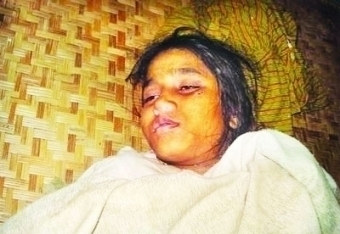
Hena Begum was a fourteen year old girl growing up in the Shariatpur region of Bangladesh until her forty year old cousin decided to rape her.
After she was raped, the rapist and his family then beat her until she was unconscious.
Next, the local Sharia (Islamic) courts ruled that yound Hena should receive 101 lashes for the crime of adultery — for the crime of being a child raped by an adult.
The Muslim clerics took the young girl, who still could not stand on her own, to a public square and proceeded to deliver the 101 lashes. After receiving 80 lashes, young Hena collapsed. Her family was allowed to take her to a hospital where she died from her wounds.
The child’s father, Dorbesh Khan, was also ordered to pay a fine equal to approximately $700 USD — quite a considerable sum in a nation which is suffering under the poverty which almost inevitably results from Islamic rule.
The rapist, Mahbub Khan, had been previously convicted of rape and sentenced to marry his rape victim. The rape victim from that encounter was one of the family members who helped beat young Hena unconscious before her “trial.” Mahbub has since disappeared in order to avoid punishment for this more recent rape.
What sort of people would beat a fourteen year old girl to death in a public square — and call it justice? This is not the sort of religious tolerance that I as a moral human being am willing to accept.

Wednesday, 29 May 2013

Chechnya: daily life

Chechnya: daily life

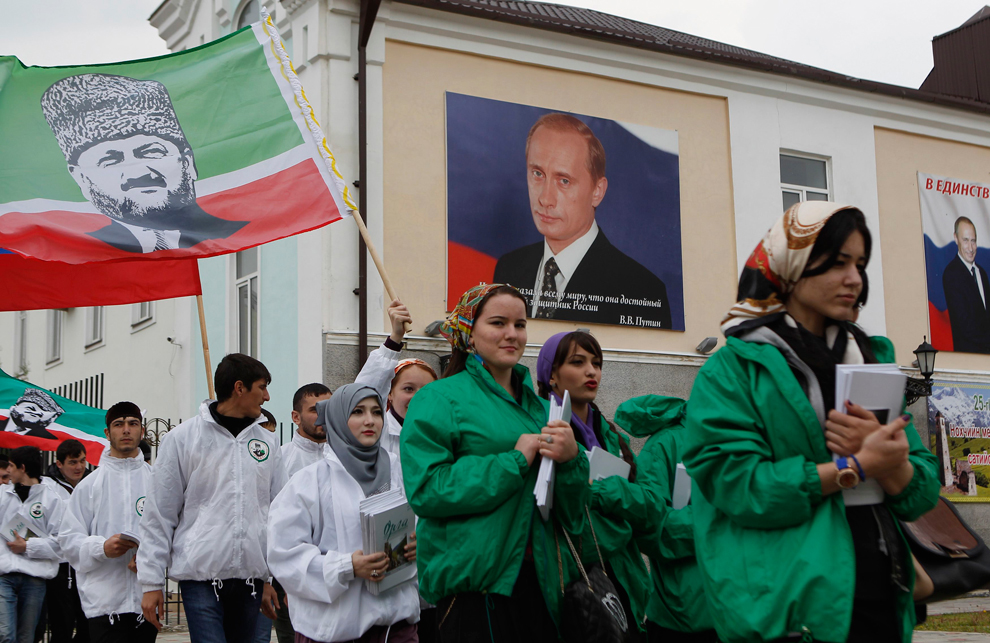
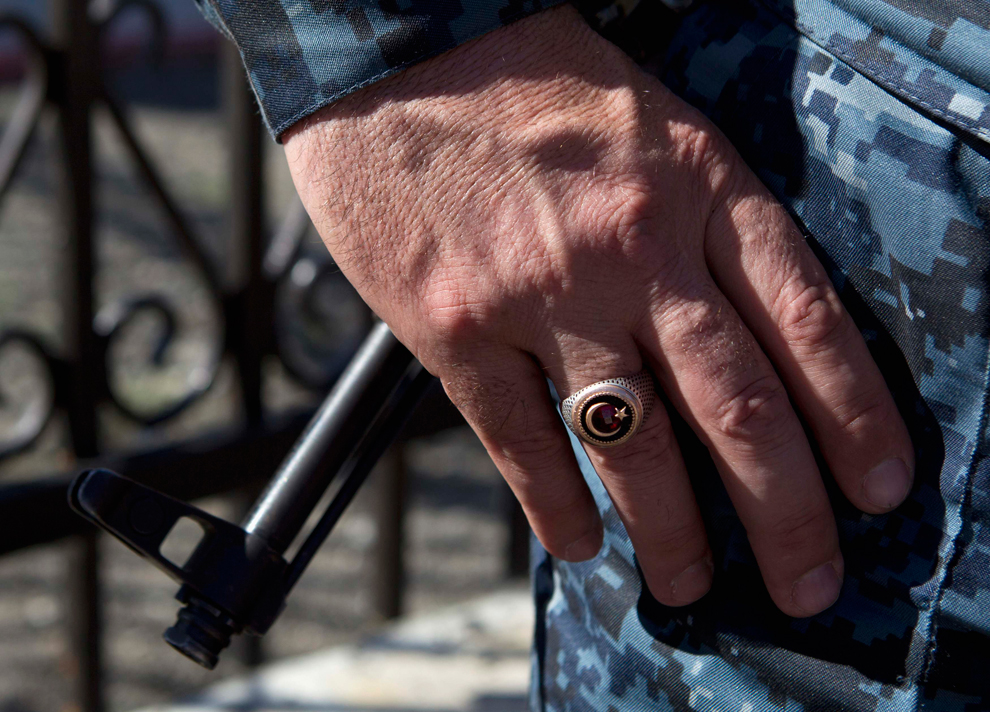
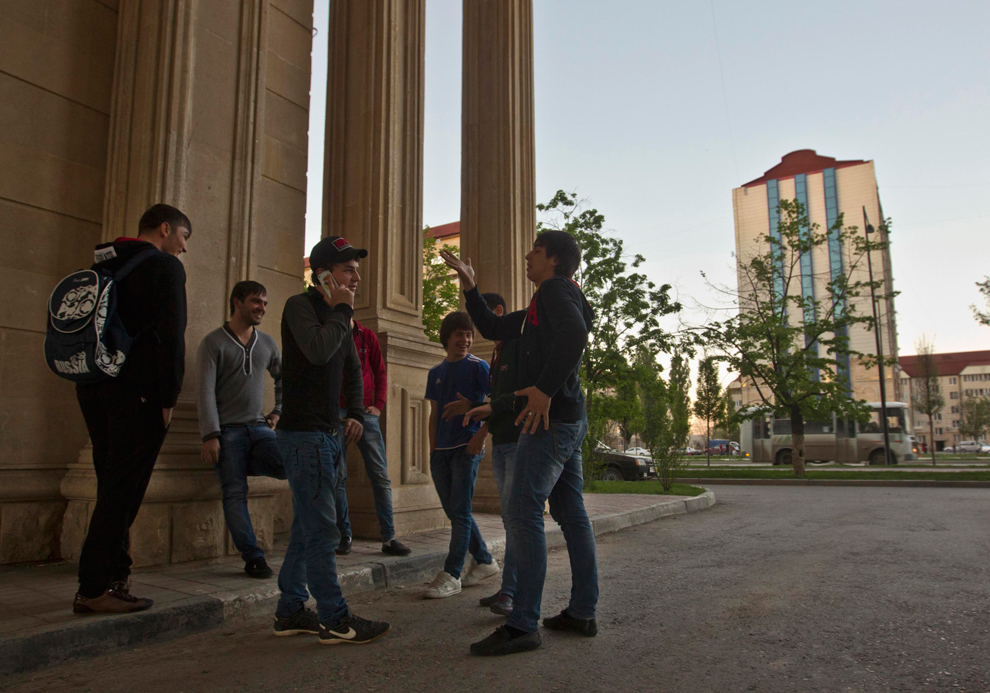
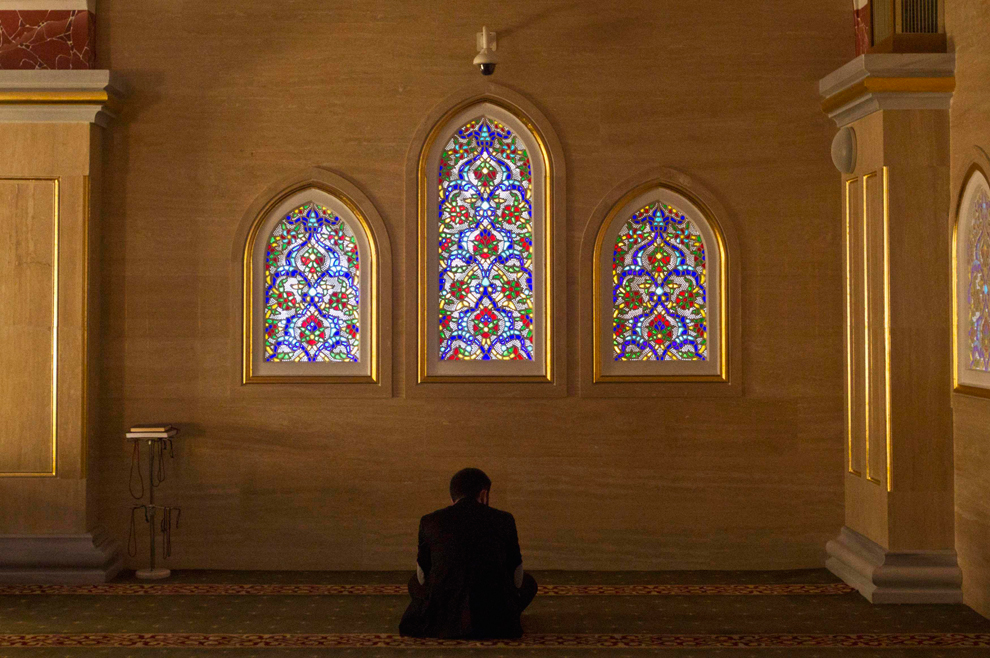
After two Chechen brothers were named in connection with the Boston Marathon bombings, Reuters photographer Maxim Shemetov took this collection of images titled "Inside Modern Chechnya" showing daily life in the semi-autonomous Russian region known for a centuries-­old tradition of defying Moscow’s rule. Shemetov focused on the area in and around the capital of Grozny. -- Lloyd Young

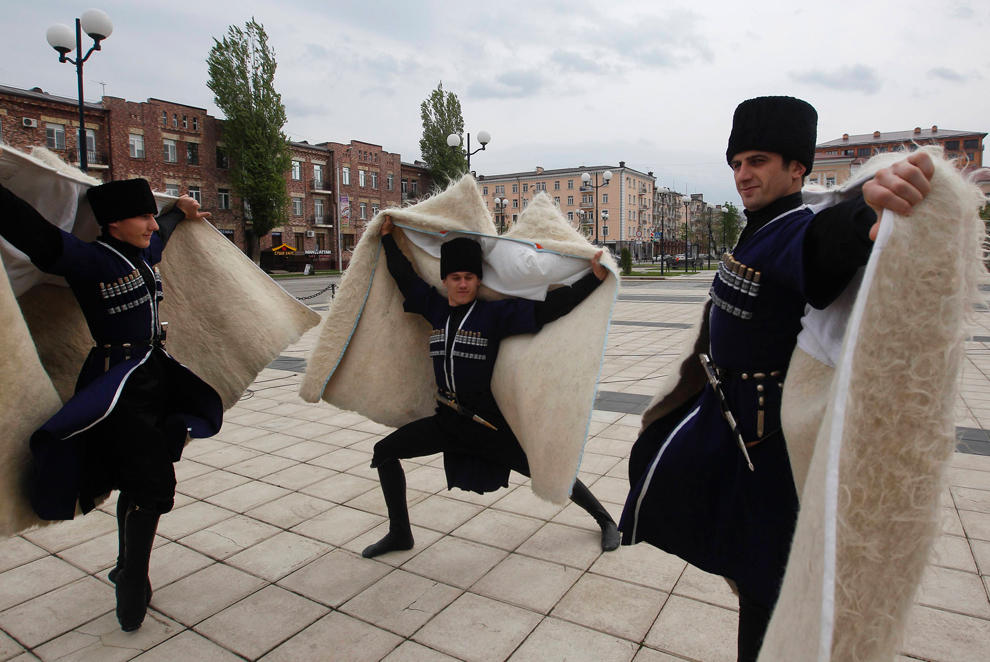
Members of a Chechen dance group pose for photographers at a government-organized event marking Chechen language day in the center of the Chechen capital Grozny on April 25. (Maxim Shemetov/Reuters)

2
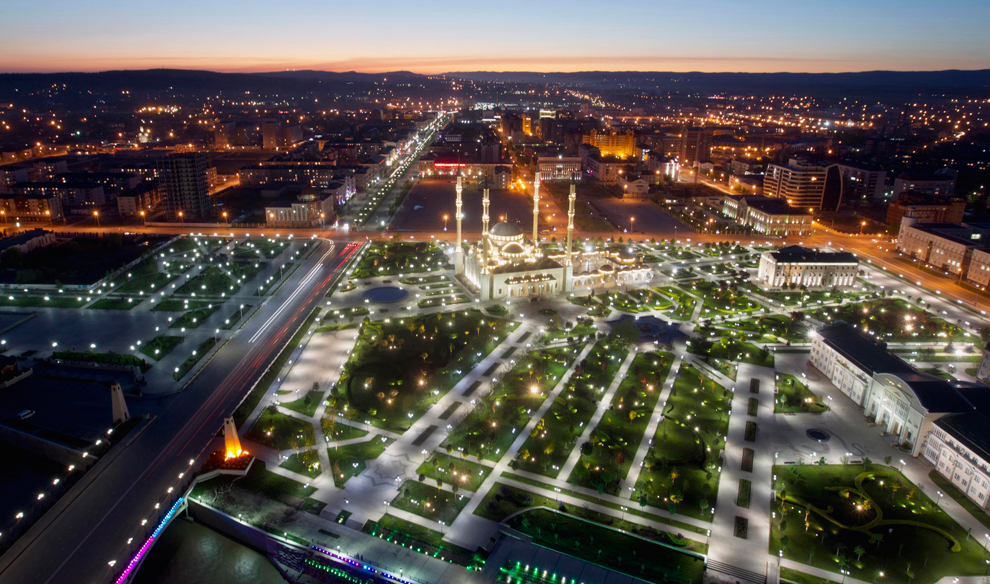
An aerial view shows the center of the Chechen capital of Grozny on April 29. (Maxim Shemetov/Reuters) #

3
Chechen leader Ramzan Kadyrov, center, watches as men load up a cannon during a government-organized event marking Chechen language day in the center of the Chechen capital on April 25. (Maxim Shemetov/Reuters) #

4
A police car drives along a street in the center of Grozny on April 22. (Maxim Shemetov/Reuters) #

5
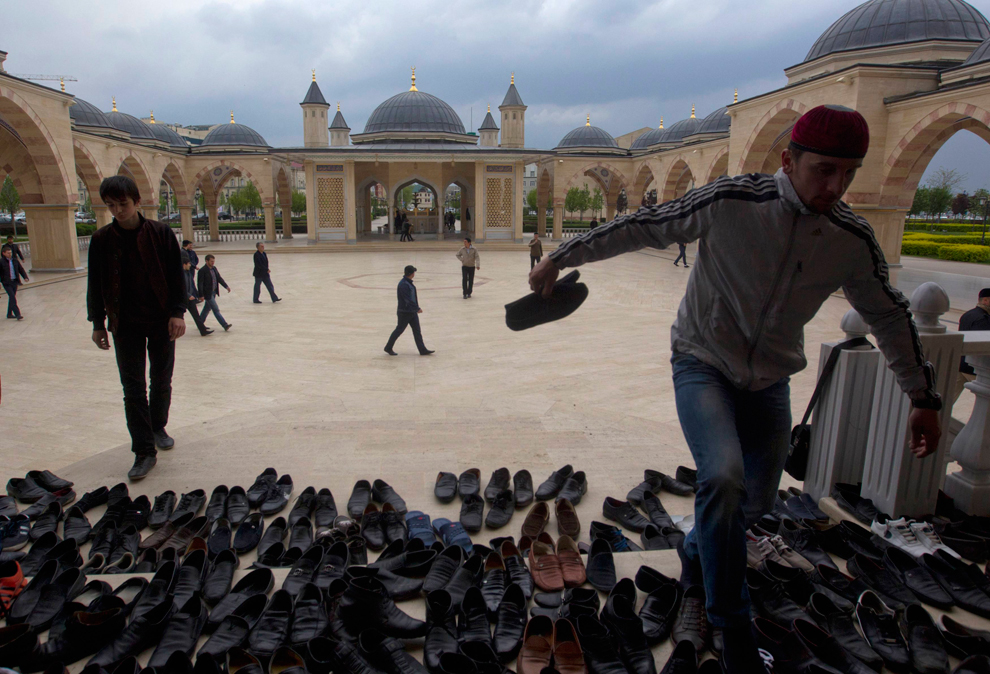
Muslim men arrive for Friday prayers at the central mosque in the Chechen capital of Grozny on April 26. (Maxim Shemetov/Reuters) #

6
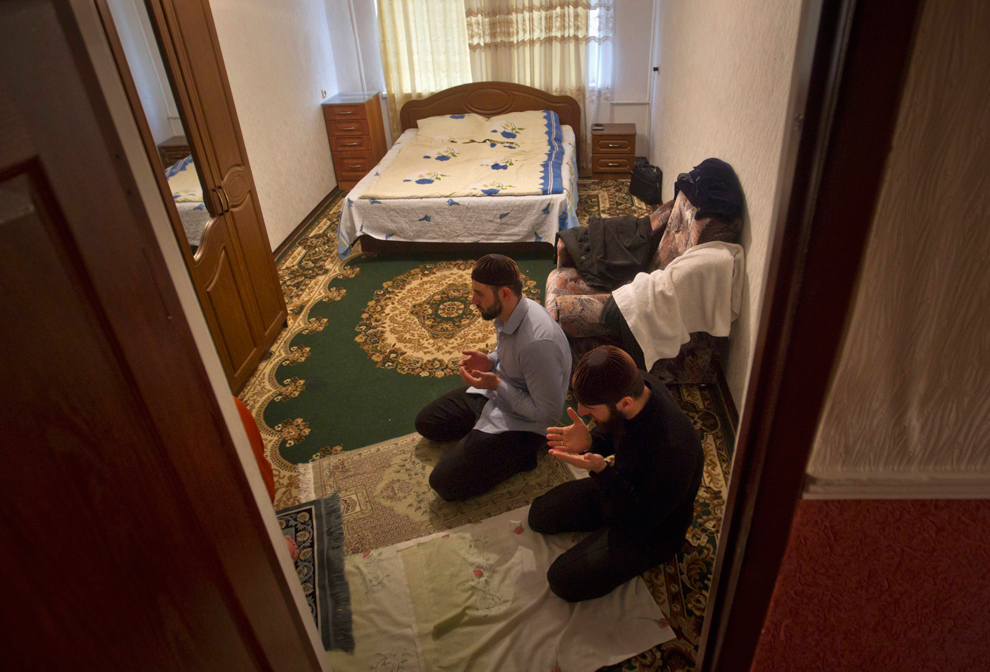
Anzor and Salakhutdin, students at the Russian Islamic University, pray in their flat in Grozny on April 23. (Maxim Shemetov/Reuters) #

7
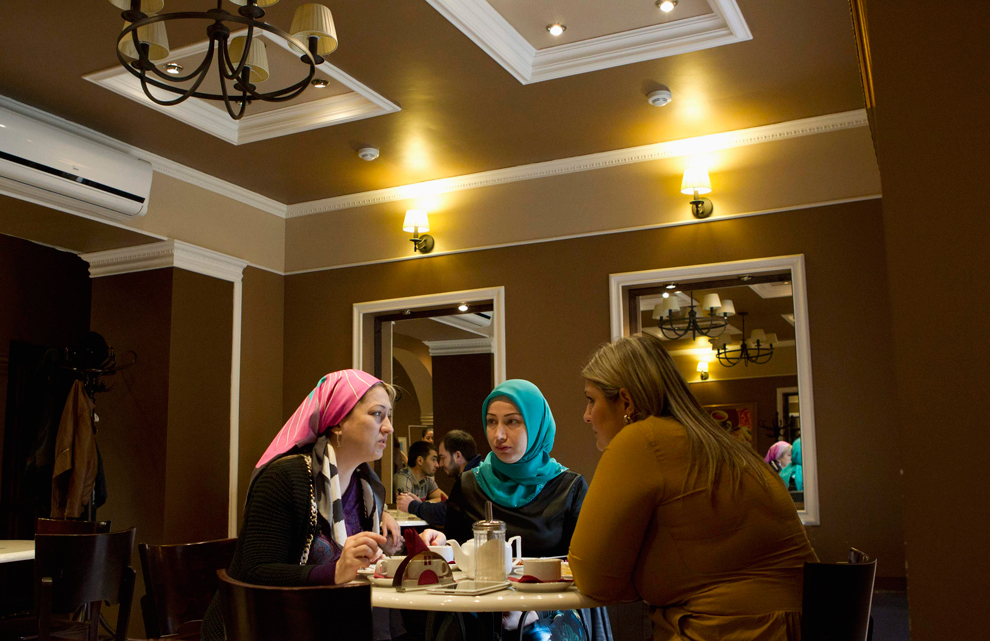
Chechen women chat in a cafe in the center of Grozny on April 23. (Maxim Shemetov/Reuters) #

8
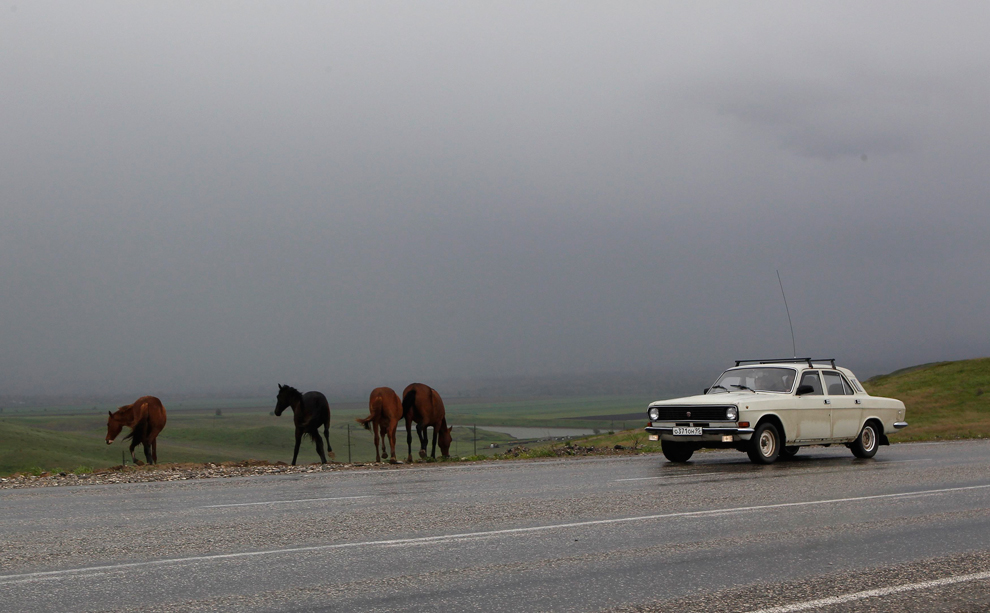
A car drives past horses, standing at the edge of a road, outside the Chechen capital of Grozny on April 24. (Maxim Shemetov/Reuters) #

9
Cars drive along the road outside Chiri-Yurt, the village where the Tsarnaev family has it's roots, in Chechnya, Russia on April 29. (Maxim Shemetov/Reuters) #

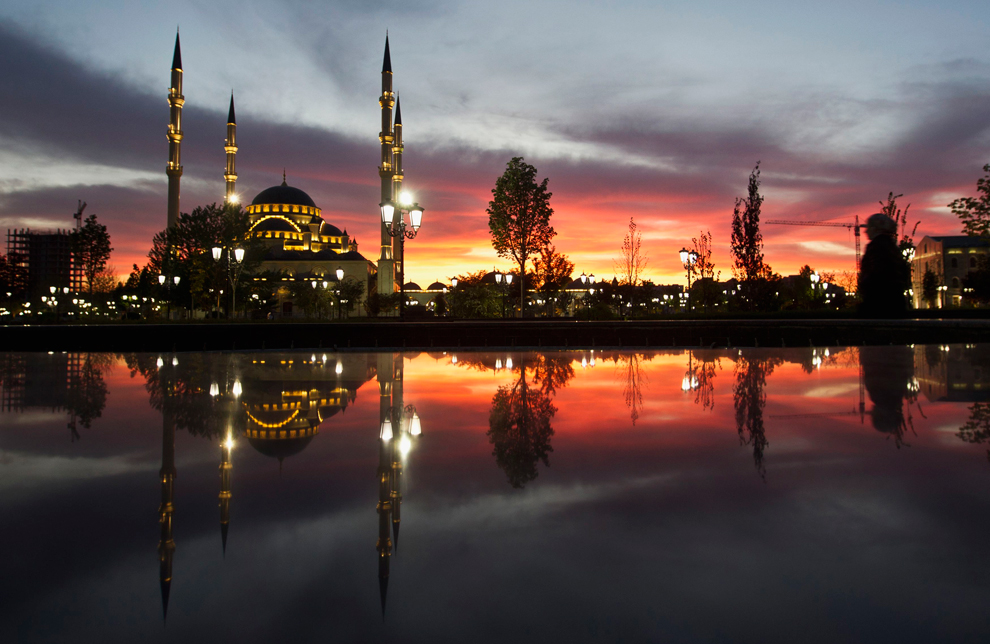
The Heart of Chechnya mosque is seen in the Chechen capital on April 27. (Maxim Shemetov/Reuters) #

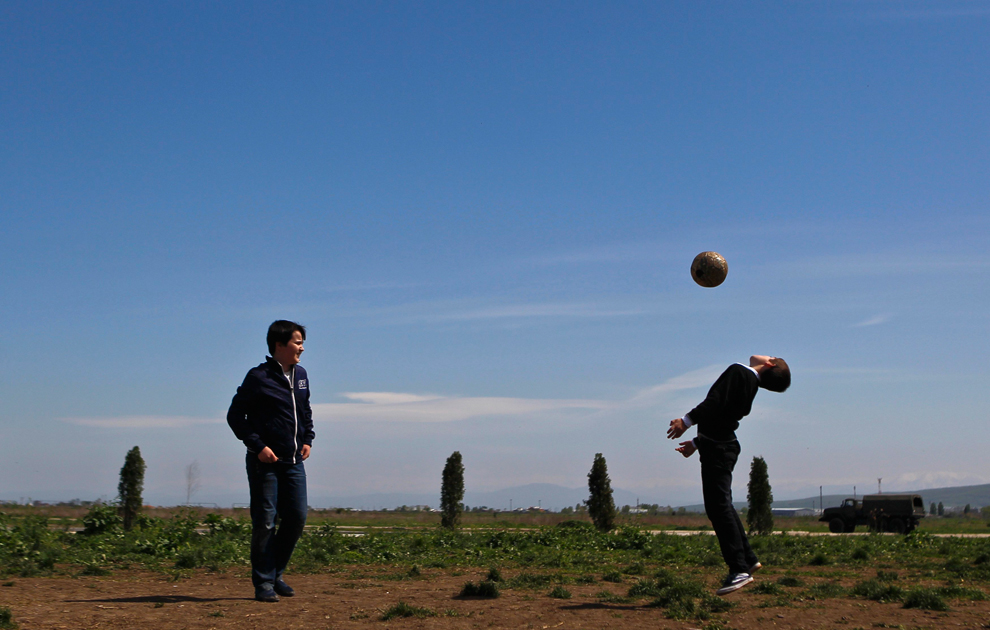
Boys play soccer on the outskirts of Grozny on April 27. (Maxim Shemetov/Reuters) #

Muslim men wait for Friday prayers in the Heart of Chechnya Mosque in Grozny on April 26. (Maxim Shemetov/Reuters) #

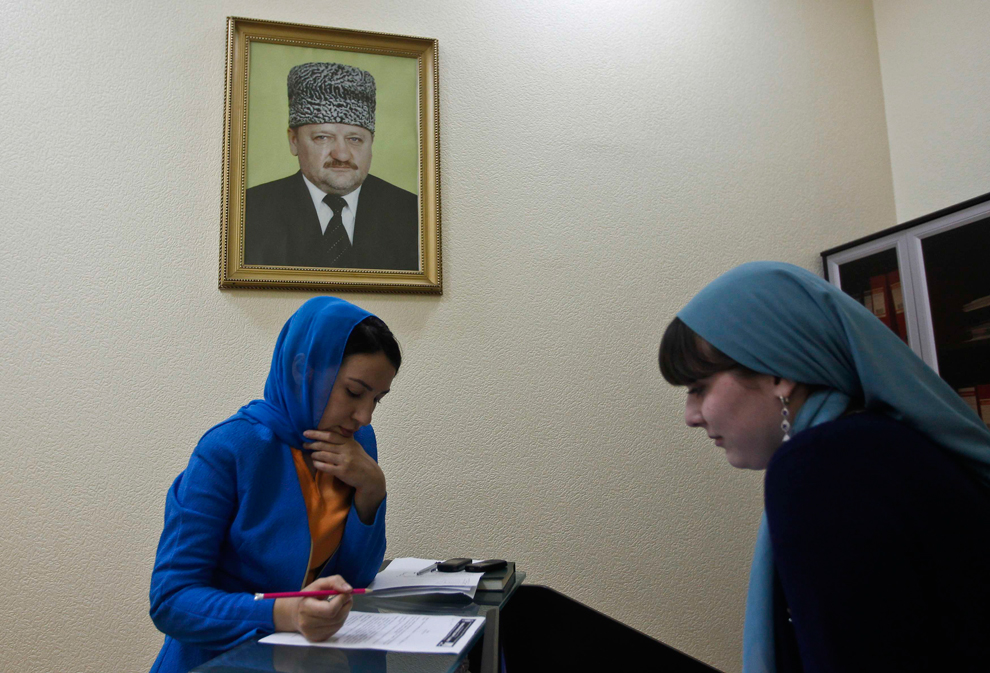
An employee of a memorial complex devoted to former Chechen leader Akhmad Kadyrov signs documents in the Chechen capital on April 26. (Maxim Shemetov/Reuters) #

Students attend a lesson at the Russian Islamic University in the Chechen capital of Grozny on April 23. (Maxim Shemetov/Reuters) #

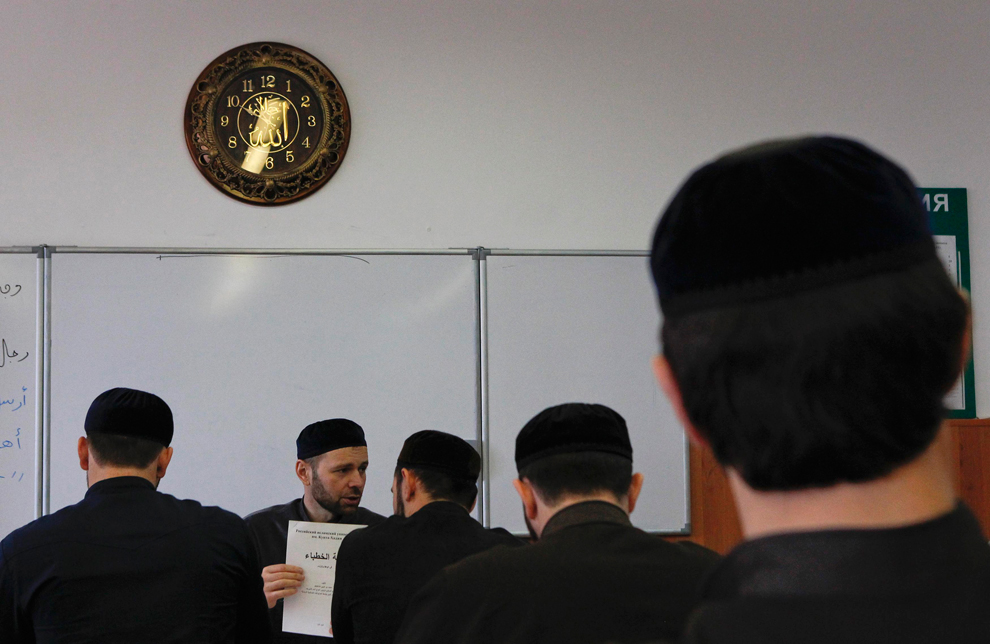
Students attend a lesson in Sharia law at the Russian Islamic University on April 23. (Maxim Shemetov/Reuters) #

Terek Grozny fans support their team during a soccer match against Amkar Perm at the Akhmad Arena stadium in Grozny on April 27. (Maxim Shemetov/Reuters) #

Participants in a local mixfight competition wrestle in the ring, with a portrait of former Chechen leader Akhmad Kadyrov in the background in the village of Goryachevodsk on April 24. (Maxim Shemetov/Reuters) #

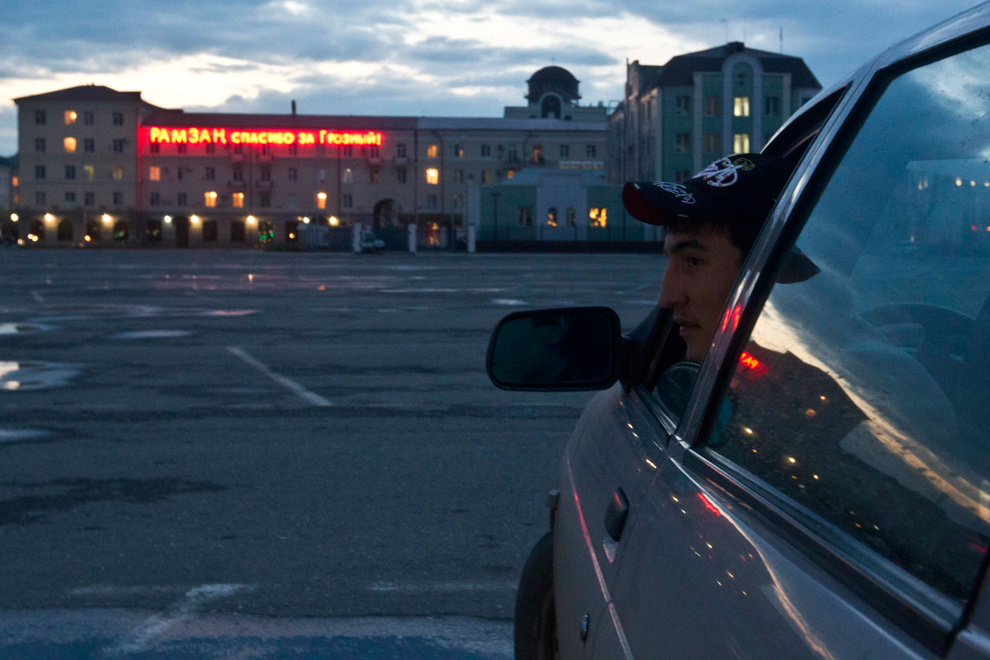
A young Chechen man looks out of a car in front of a building that bears the slogan: "Ramzan, thank you for Grozny!" in the Chechen capital on April 22. (Maxim Shemetov/Reuters) #

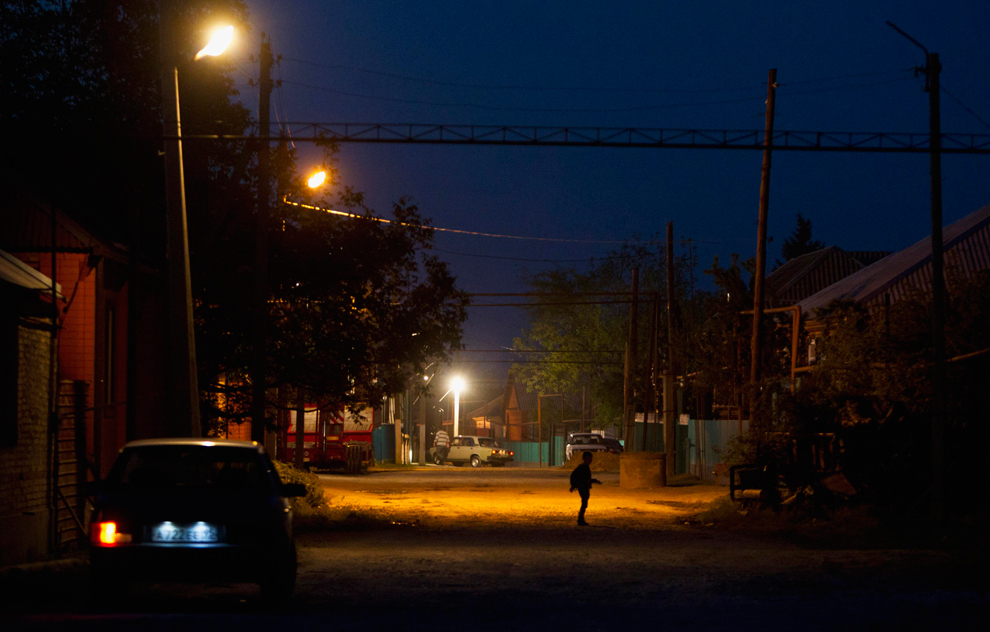
A boy walks along the street in Chiri-Yurt, the village where the Tsarnaev family has its roots, in Chechnya, Russia on April 29. (Maxim Shemetov/Reuters) #

People wait for a bus outside Chiri-Yurt, the village where the Tsarnaev family has its roots, in Chechnya, Russia. (Maxim Shemetov/Reuters) #

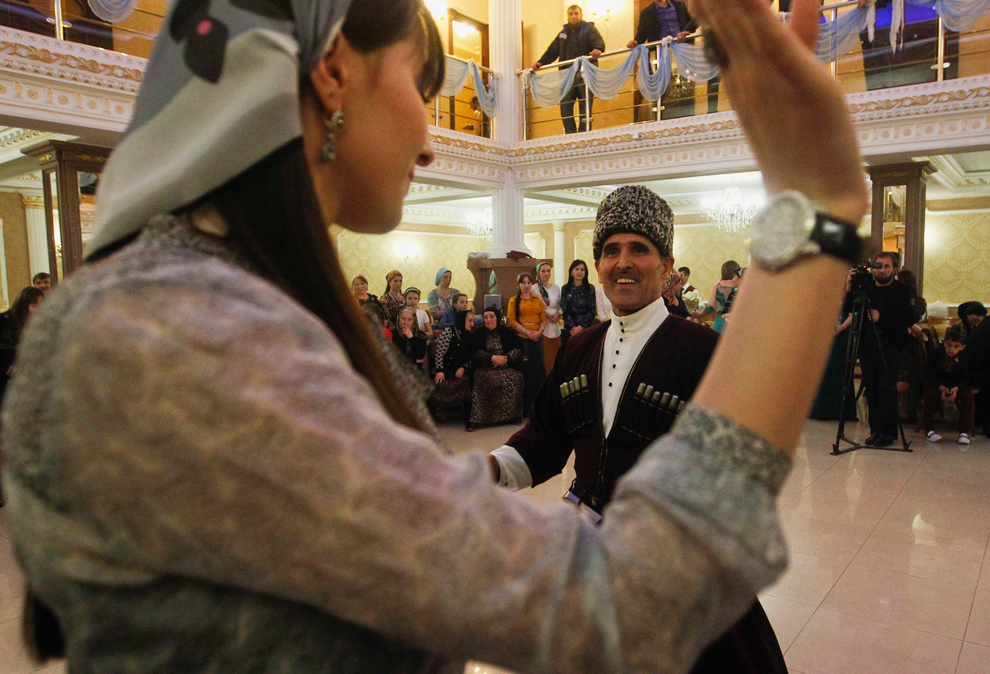
Guests dance at a wedding in the Chechen capital on April 24. (Maxim Shemetov/Reuters) #

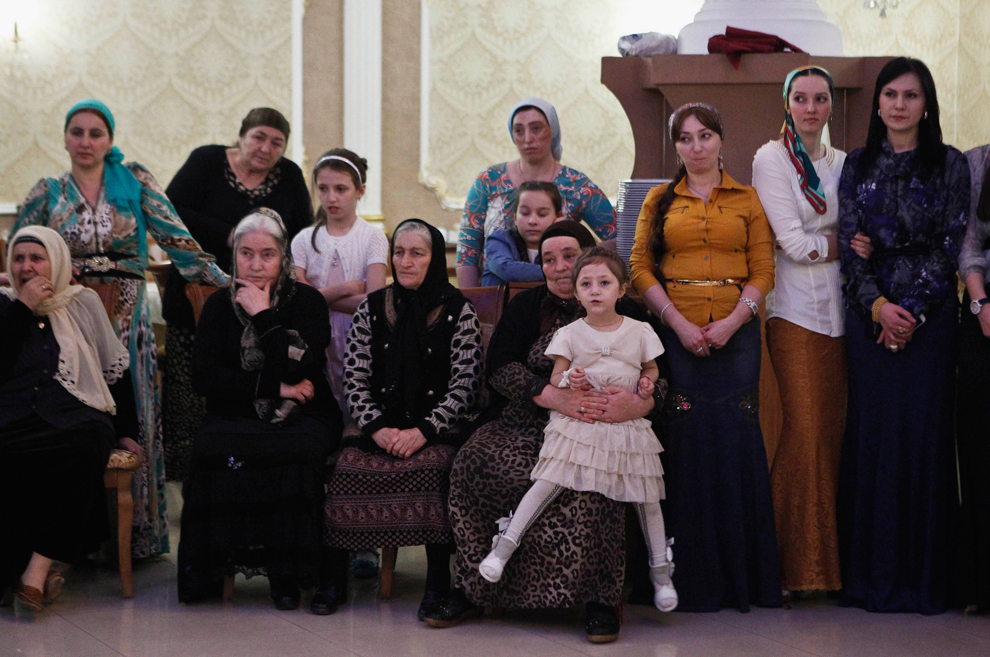
Women watch dancing at a wedding party in Grozny on April 24(Maxim Shemetov/Reuters) #

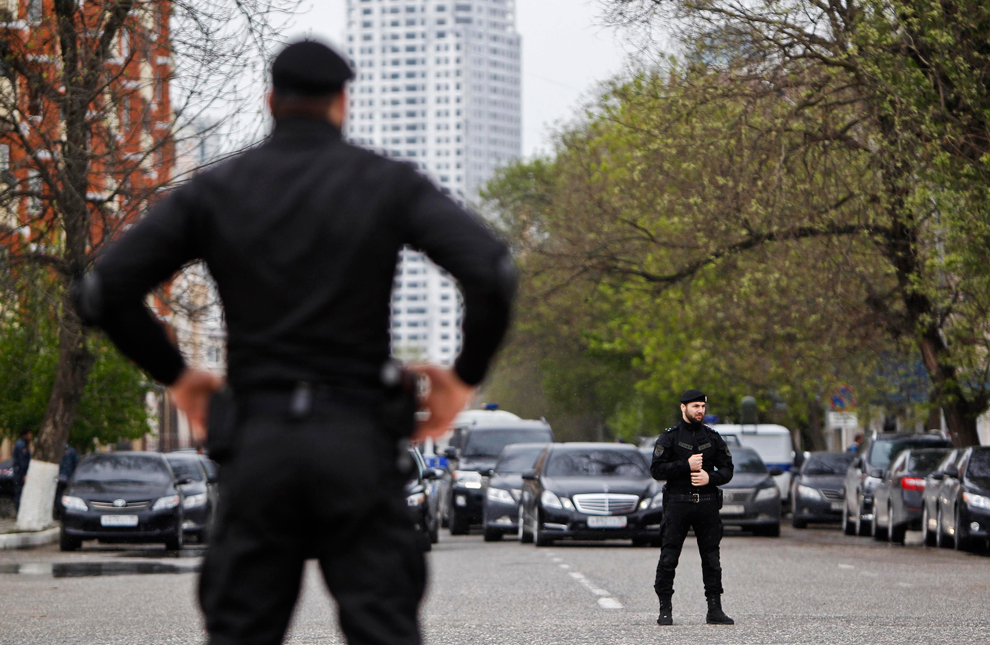
Special forces officers stand guard during a government-organized event marking Chechen language day in the center of the Chechen capital of Grozny on April 25. (Maxim Shemetov/Reuters) #

Members of a youth club supporting former Chechen leader Akhmad Kadyrov (printed on flag) march along a street during a rally in the center of the Chechen capital of Grozny on April 25. (Maxim Shemetov/Reuters) #

A policeman wears a ring showing the Islamic symbol of the star and crescent, in the Chechen village of Itum-Kale April on 29. (Maxim Shemetov/Reuters) #

A group of young Chechen men hang out on a street corner in the center of the Chechen capital of Grozny on April 29. (Maxim Shemetov/Reuters) #

A Muslim man prays in the Heart of Chechnya Mosque in Grozny on April 26. (Maxim Shemetov/Reuters) #

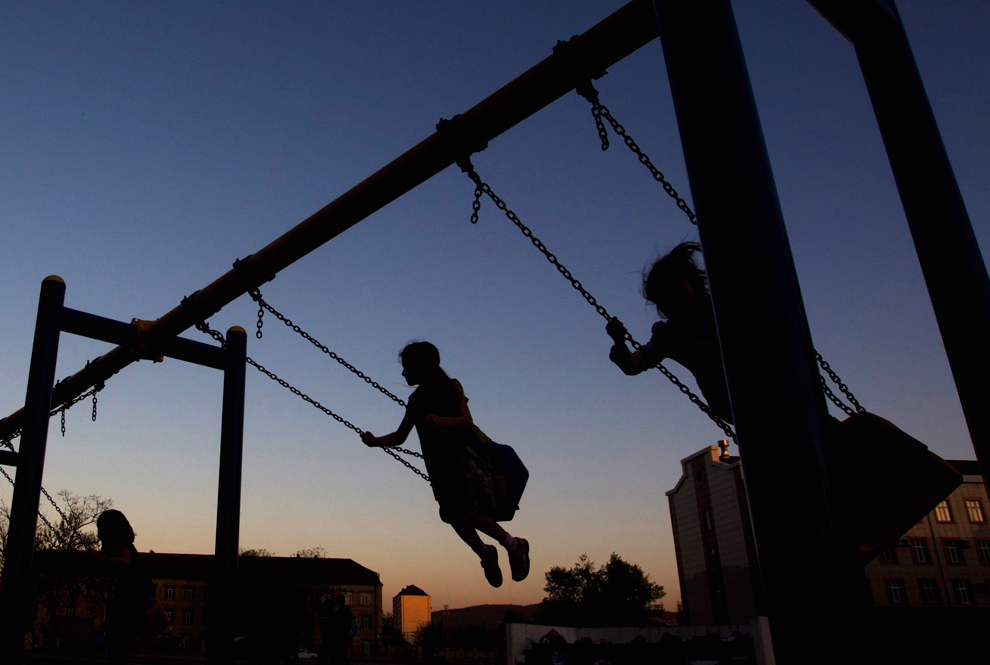
Girls play on swings in a playground in the Chechen capital of Grozny on April 29. (Maxim Shemetov/Reuters) #

--